
How to Japanese

How to Japonese
How to "Get Used to" Japanese

« ジュース ≠ juice, except when ジュース = juice
Game Lingo – 発売 »

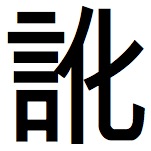
Cool Kanji – 訛

namari

Just a quick cool kanji for today. Can you figure it out what it means based on the radicals alone? Check after the break to see if you are right.

言 means speak, and 化 means change. Together they are read as – have you figured it out yet? – なまり: accent or dialect. Very cool – speaking changes; voilà, accent. This can also be used as a verb – most oftenly, 訛っている. Your goal as a non-native student of the Japanese language should be to achieve ちょっとだけ訛っている status.

This entry was posted on Friday, August 7th, 2009 at 7:11 am and is filed under kanji, vocab. You can follow any responses to this entry through the RSS 2.0 feed. You can leave a response, or trackback from your own site.

3 Responses to “Cool Kanji – 訛”

  1. Kujaku Says:
    August 12th, 2009 at 12:54 pm

    The kanji with 言 on the left are the ones I find hardest to remember. I’m not sure why, although I remember after being thwarted by 請 enough times, I came up with the mnemonic “At 5PM at Friday, all your coworkers requests(請) come out of the blue (青)”Not exact to the meaning, but it worked well enough.

    Here’s a cool one for you I found recently, while looking up another character with the 舟 radical:
    艝
    My first thought was “What does a boat have to do with snow?” Then I looked it up in my word processor dictionary, and discovered it meant “sled”. I laughed at not figuring it out earlier, but thought the character was pretty awesome.

  2. Daniel Says:
    August 13th, 2009 at 8:49 am

    Whoa, cool kanji!

  3. Gregory Says:
    August 23rd, 2009 at 4:42 pm

    Another cool kanji is 滝 (taki, “waterfall”). Left: water, right: dragon. Indeed, a waterfall resembles a “liquid dragon”.

Leave a Reply

 
  • Follow @howtojapanese How to Japonese

    Promote Your Page Too
  • Pages

    • About
    • Contact
    • Portfolio
  • Archives

    • February 2012
    • January 2012
    • December 2011
    • November 2011
    • October 2011
    • September 2011
    • August 2011
    • July 2011
    • June 2011
    • May 2011
    • April 2011
    • March 2011
    • February 2011
    • January 2011
    • November 2010
    • October 2010
    • September 2010
    • August 2010
    • July 2010
    • June 2010
    • May 2010
    • April 2010
    • March 2010
    • February 2010
    • January 2010
    • December 2009
    • November 2009
    • October 2009
    • September 2009
    • August 2009
    • July 2009
    • June 2009
    • May 2009
    • April 2009
    • March 2009
    • February 2009
    • January 2009
    • December 2008
    • November 2008
    • October 2008
    • September 2008
    • August 2008
    • July 2008
    • June 2008
    • May 2008
    • April 2008
    • March 2008
    • February 2008
  • Categories

    • airbag expressions (5)
    • appear (2)
    • beer (28)
    • body parts (7)
    • casual (31)
    • causality (3)
    • causative (10)
    • class notes (3)
    • comedy (26)
    • conjunctions (2)
    • custom (2)
    • dictionaries (5)
    • food (53)
    • gerund-related (6)
    • get used to it! (66)
    • giving (3)
    • kanji (88)
    • literature (45)
    • Murakami (56)
    • onomatopoeia (4)
    • particles (2)
    • passive (11)
    • phone (1)
    • podcast (1)
    • polite (27)
    • politics (3)
    • probability / possibility (3)
    • project management (5)
    • puzzle (38)
    • random (95)
    • reading (15)
    • receiving (3)
    • refusal (10)
    • reporting (1)
    • requesting (6)
    • research (2)
    • Resources (16)
    • theory (8)
    • travel (14)
    • TV (17)
    • Uncategorized (8)
    • underrated japan (5)
    • video (39)
    • video games (19)
    • vocab (110)
    • wordplay (31)
    • 変換 (2)

How to Japanese powered by WordPress | minimalism by www.genaehr.com
Entries (RSS) and Comments (RSS).