
How to Japonese

How to Japonese
How to “Get Used to” Japanese

« 1Q84 Postmortem
号外 – Dear Daniel »

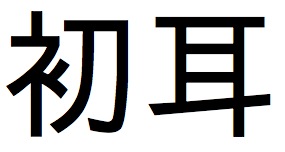
Cool Compound – 初耳

hatsumimi

Short and simple today. 初耳 (はつみみ) is a nice quick way to say that you’ve heard something for the first time. Makes sense, right?

This:

それは初耳だ。

is 40% more efficient than this:

それを聞いたのは初めてだ。

And 初めて聞いた (the pattern I always used that now makes me think of an Eastern-European-accented “First time I hear this!”) I think should really only be used as a modifier, i.e. 初めて聞いたとき.

This entry was posted on Friday, July 31st, 2009 at 7:49 am and is filed under get used to it!, kanji, vocab. You can follow any responses to this entry through the RSS 2.0 feed. You can leave a response, or trackback from your own site.

8 Responses to “Cool Compound – 初耳”

  1. Jake Says:
    July 31st, 2009 at 10:16 am

    that’s excellent! it really is.
    I don’t know if this has been published on the blog before, but I like this compound when pondering whether I’ve seen or heard of something before: verb + remember

    聞き覚えるかなぁー
    kiki oboeru kana-
    見覚えるかなぁー
    mi oboerukana-
    それが食べ覚えるかなぁー
    sore ga tabeoboeru kana-
    and so on..

    it’s really cool and fluid.

    cheers again

  2. Jake Says:
    July 31st, 2009 at 10:18 am

    follow up,
    I’m not really sure to what extent you can use it as well. I don’t know how many verbs you can prefix remember with. I have yet to use
    やり覚える yet, so I don’t know how it will go down.

  3. soma36 Says:
    July 31st, 2009 at 8:06 pm

    Hell yes. You know you have had an interesting week when you get to use this most days!

  4. Nick Says:
    August 1st, 2009 at 12:51 am

    I have the same feeling about 初めて聞いた, and yet I am pretty sure I have actually heard it frequently from Japanese people. For what it’s worth, Google has 526,000 hits for “初めて聞きました”.

  5. Mike Says:
    August 1st, 2009 at 1:18 am

    Have to agree with Nick here. 初めて聞いた is a perfectly acceptable way of conveying the notion. As for the Eastern-European vibe, that may be for good reason. Many E. European languages have a system of declension and conjugation that renders word order fluid by comparison with English. Japanese has some similar qualities. But this 初耳 is interesting. Apparently they’ve got a 初目(はつめ) as well, which is sort of self-explanatory (http://monjiro.net/dic/head/29/99452/12/8). I’m starting to wonder if one can make a compound out of any of the sensory organs…there’s a first time for everything after all.

  6. Daniel Says:
    August 1st, 2009 at 7:06 am

    Good point, Nick. And now that I think about it, 初めて知った is a perfectly valid phrase, so I guess 初めて聞いた really is okay…must’ve psyched myself out that I was speaking weird Japanese.

    Hey Jake, those are definitely cool phrases, but I think they’re most often used in the pattern 見覚えがある. 見- and 聞き- being far more common than any others.

  7. Jake Says:
    August 1st, 2009 at 8:08 am

    yeah, I kind of forgot about the ” がある ” bit. haha, hope I haven’t corrupted too many of your readers!
    Thanks for the heads up, and thanks for the cool blog (only just found it!)
    -Jake

  8. Ryan Says:
    August 6th, 2009 at 3:33 pm

    That’s ace! I thought I’d contracted it enough when I’d got to その話は初耳だ but it turns out I don’t even need the 話! Superb cheese..

Leave a Reply

  • Insta-Hows

      follow me on Twitter
    • Pages

      • About
      • Contact
      • Portfolio
    • Archives

      • July 2010
      • June 2010
      • May 2010
      • April 2010
      • March 2010
      • February 2010
      • January 2010
      • December 2009
      • November 2009
      • October 2009
      • September 2009
      • August 2009
      • July 2009
      • June 2009
      • May 2009
      • April 2009
      • March 2009
      • February 2009
      • January 2009
      • December 2008
      • November 2008
      • October 2008
      • September 2008
      • August 2008
      • July 2008
      • June 2008
      • May 2008
      • April 2008
      • March 2008
      • February 2008
    • Categories

      • airbag expressions (5)
      • appear (2)
      • beer (24)
      • body parts (7)
      • casual (25)
      • causality (2)
      • causative (9)
      • comedy (22)
      • conjunctions (1)
      • custom (2)
      • dictionaries (5)
      • food (43)
      • gerund-related (6)
      • get used to it! (57)
      • giving (3)
      • kanji (83)
      • literature (40)
      • Murakami (40)
      • onomatopoeia (3)
      • particles (2)
      • passive (9)
      • phone (1)
      • polite (20)
      • politics (3)
      • probability / possibility (3)
      • project management (4)
      • puzzle (37)
      • random (71)
      • reading (13)
      • receiving (3)
      • refusal (9)
      • reporting (1)
      • requesting (6)
      • research (2)
      • Resources (16)
      • theory (8)
      • travel (14)
      • TV (16)
      • Uncategorized (7)
      • underrated japan (5)
      • video (30)
      • video games (17)
      • vocab (99)
      • wordplay (28)
      • 変換 (2)

    How to Japonese powered by WordPress | minimalism by www.genaehr.com
    Entries (RSS) and Comments (RSS).