
How to Japanese

How to Japonese
How to "Get Used to" Japanese

Archive for the ‘custom’ Category

Cool Compound – 主食

Friday, September 4th, 2009

shushoku

Over the 4th of July weekend, I went back to the small town in Fukushima where I spent three years teaching English and “coordinating international relations.” I had a nomikai with the students from the English conversation class I taught at the Town Hall, and then a few of us lit fireworks in the parking lot of the town offices. It was a nice little trip, great to get out of the city and just relax the whole weekend.

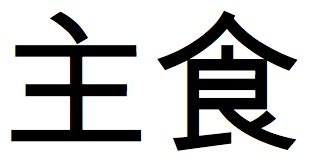
I ran into one of the great Japanese compounds at the dinner – 主食 (しゅしょく). We started with a toast and then snacked on sashimi, bits of fried food, edamame and a bunch of other things. El vino did flow – beer and 麦焼酎水割り, mostly. Towards the end, I could kind of tell it was time to wrap things up, but then one of the ladies said, だめだ。何か主食とらないと。 We couldn’t leave without having a 主食 – a staple food. The classic Japanese 主食 is rice, but the restaurant had no rice dishes, so we settled for ramen. Apparently noodles count as a staple food. The great illusion with 主食 is that rice is the only one that exists in the world. This proves otherwise.

Because rice isn’t eaten as much abroad, often Japanese will think that there are no 主食 in the US. I always point to Mexican cuisine and the use of corn in tortillas, pupusas, and tamales. Corn and beans are all staple foods all over the world. Don’t fall for the 主食 fallacy.

I’m heading back to my town to help carry the mikoshi in a festival next weekend. Should be fun.

Posted in custom, food, vocab | 6 Comments »

Cool Custom – 差し入れ

Friday, October 24th, 2008

Anyone who has worked in Japan in some capacity knows that there are a lot of social functions outside of work that actually semi-count as work. Welcome parties, end of year parties, new year parties, farewell parties. They serve to confirm that you are part of the group, and the free-flowing booze loosens lips, allowing sensitive topics to be discussed in a relaxed atmosphere.

The one problem with these parties is that they are expensive. In the small town where I worked, they cost at least 3000 yen (roughly $30) but were usually 5000 yen ($50). You get a nice dinner and as much beer as you are comfortable with. I went with the junior high school, sometimes the elementary schools, the people at the apartment building where I lived, and the Board of Education. As you can imagine, the cost adds up, especially around the end of the calendar and academic year.

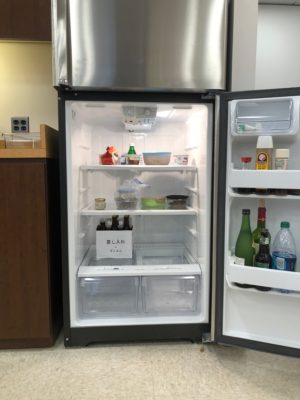
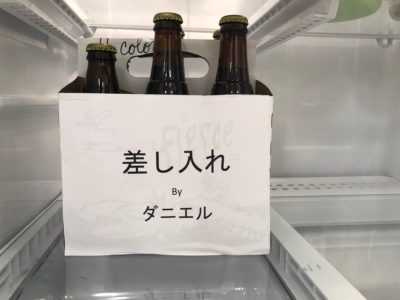
I rarely refused for financial reasons, but I know other teachers who did. I was sometimes unable to go due to scheduling conflicts, but I felt really bad when I couldn’t attend – the parties were fun, and I was in a small enough town (8000 people) that finding a way to socialize was difficult. During the farewell party for the junior high school in my third year, I noticed that the young computer tech guy was carrying a giant bottle of nihonshu. At some point he stood up and announced that the head tech guy, who was not present, had given it as a 差し入れ. That was when it clicked. He couldn’t make it to the party for whatever reason, so he left a present instead. If only I had known that throughout my time in the town.

差し入れ (さしいれ), which literally means “insert,” can be considered a kind of preemptive omiyage of sorts. Often it’s given when you can’t attend an event, and in those cases it’s usually liquor. It’s a fantastic custom! It shows that you really wanted to participate, it probably costs less than the meal, and your coworkers will gush over you once they’re nice and boozed up and finally make it to your bottle.

Nihonshu and shochu are both appropriate 差し入れ for parties, but I recommend shochu since it can be split between more drinks and watered down for people who don’t drink that much. It will also increase your 渋い factor.

差し入れ are appropriate in other situations, too. If you know someone is studying or working overtime, bring them some coffee. It looks like people also give it to contractors doing work on their house, in which case nikuman, warm oshibori, or coffee are all winners.

Everyone knows about omiyage, but I feel like 差し入れ are somewhat uncharted. Hugely useful. Win friends and influence people with this cool custom.

Posted in custom, get used to it!, giving, vocab | No Comments »

  • Follow @howtojapanese How to Japonese

    Promote Your Page Too
  • You are currently browsing the archives for the custom category.

  • Pages

    • About
    • Contact
    • Portfolio
  • Archives

    • February 2012
    • January 2012
    • December 2011
    • November 2011
    • October 2011
    • September 2011
    • August 2011
    • July 2011
    • June 2011
    • May 2011
    • April 2011
    • March 2011
    • February 2011
    • January 2011
    • November 2010
    • October 2010
    • September 2010
    • August 2010
    • July 2010
    • June 2010
    • May 2010
    • April 2010
    • March 2010
    • February 2010
    • January 2010
    • December 2009
    • November 2009
    • October 2009
    • September 2009
    • August 2009
    • July 2009
    • June 2009
    • May 2009
    • April 2009
    • March 2009
    • February 2009
    • January 2009
    • December 2008
    • November 2008
    • October 2008
    • September 2008
    • August 2008
    • July 2008
    • June 2008
    • May 2008
    • April 2008
    • March 2008
    • February 2008
  • Categories

    • airbag expressions (5)
    • appear (2)
    • beer (28)
    • body parts (7)
    • casual (31)
    • causality (3)
    • causative (10)
    • class notes (3)
    • comedy (26)
    • conjunctions (2)
    • custom (2)
    • dictionaries (5)
    • food (53)
    • gerund-related (6)
    • get used to it! (66)
    • giving (3)
    • kanji (88)
    • literature (45)
    • Murakami (56)
    • onomatopoeia (4)
    • particles (2)
    • passive (11)
    • phone (1)
    • podcast (1)
    • polite (27)
    • politics (3)
    • probability / possibility (3)
    • project management (5)
    • puzzle (38)
    • random (95)
    • reading (15)
    • receiving (3)
    • refusal (10)
    • reporting (1)
    • requesting (6)
    • research (2)
    • Resources (16)
    • theory (8)
    • travel (14)
    • TV (17)
    • Uncategorized (8)
    • underrated japan (5)
    • video (39)
    • video games (19)
    • vocab (110)
    • wordplay (31)
    • 変換 (2)

How to Japanese powered by WordPress | minimalism by www.genaehr.com
Entries (RSS) and Comments (RSS).