How to Japonese on NHK – Hermit Crab Survival Project

A few months ago I was contacted by a Japanese producer to put together a short video about the local response to the BP oil spill for the television show ガッチャン. They have a segment called STUDENT EYE where college students from around the world introduce aspects of their culture or some sort of unique student activities.

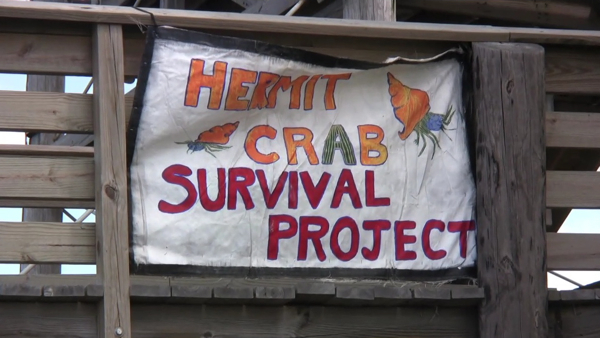
The producer had located a woman on Grand Isle who had organized a volunteer group called the Hermit Crab Survival Project to clean hermit crabs who were stuck in the oil that washed up on the beaches. She was a park ranger at Grand Isle State Park, but unfortunately working with birds or mammals required some sort of federal license, so instead she helped clean the crabs.

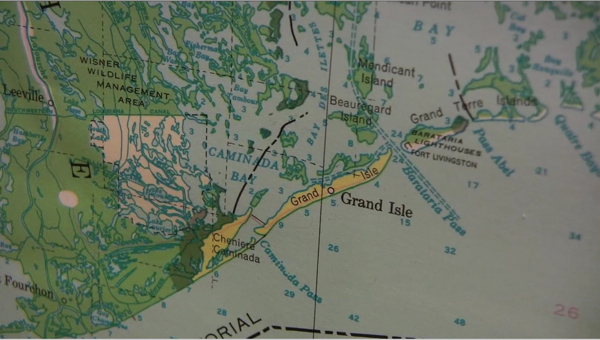
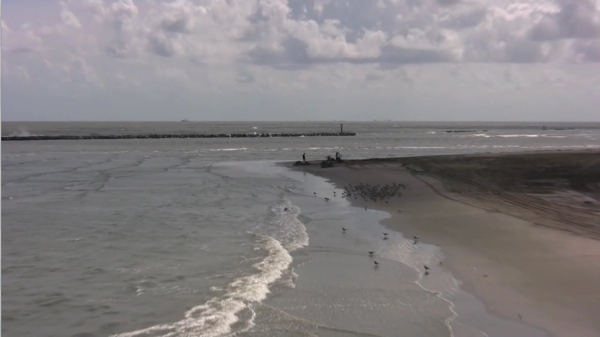
The project was already complete by the time I started working on the video, but fortunately she had video of some of the activities, and I interviewed her. I also took a trip down to Grand Isle, a barrier island about three hours south of New Orleans, to talk to the locals and get some stock footage.

It was kind of strange – I’d gone down to Grand Isle earlier in the summer and run into the hermit crab folks. Too bad I didn’t get any footage then. All the pictures above are taken from the video I submitted. I know they’ve edited it pretty heavily, so who knows what the final product will look like, but it will be airing on NHK BS1 on Friday, December 3 at 6PM. If you’re in Japan, check it out and let me know how it looks! They should post it online after it airs – I’ll definitely post a link when they do.

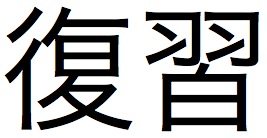
Cool Compound – 復習

This one is pretty easy to break down. 復 means “multiple” and can be seen in such useful compounds as 複数 (ふくすう, “multiple numbers” → plural) and 複雑 (ふくざつ, “multiple miscellaneous” → difficult, complicated).

習 you should recognize from your basic set of verbs – 習う (ならう, to learn).

Put them together and you get 復習 (ふくしゅう) which means “to learn multiple times” or “to learn again” – to review.

Yes, it’s that time of year again – finals time. I’ve got several meaty projects I have to finish up before the second week in December, so How to Japonese will be taking a little break. I finish my last presentation on December 9, and I’m flying out to Japan for two weeks on December 10. Regular posting will resume at some point over the holidays, most likely at some point during my visit to Japan.

Until then, go ahead and “review” some of the old material from the site. I recommend:

– the three original posts.
– my definition of かわいそう
– proof that laughter is the best study partner
– my guide to kanji compounds
– any of the posts about “airbag expressions”

See y’all again in December!

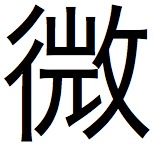
Cool Kanji – 微

Some guys wish they were taller. Others wish they had more money or were better looking. I wish I could drink more coffee. I have written about the reasoning previously – drinking coffee makes you cool, duh.

When I went out to coffee with a Japanese friend last Friday, I was trying to explain my caffeine deficiencies. I get a massive initial rush and then crash hard not long after, often requiring a nap. (Although I do feel like a genius during the rush.) I opt instead for tea, and I dole it out in small amounts from a thermos so that I can have lots of little doses to sustain me through the day.

I was having a hell of a time explaining this. I went round and round, dodging the potholes that have worked their way into my vocabulary over the past five months, trying to get my point across. Finally she figured it out and said, ああ、微調整. And I was like, なるほど!

I won’t go into 調整 (ちょうせい) all that much – it means to adjust/to make adjustments. The real point of the post is to take a closer look at the prefix 微 (び). You’ve probably already gathered this from my story, but 微 in this case means “small” or “slight” – I make small or slight adjustments in my caffeine level to prevent any highs and lows.

If you are a fan of Japanese canned coffee, you might have recognized this character from 微糖 (びとう), which means a small amount of sugar. This is less sugar than 低糖 (ていとう), which means low sugar. But these are two-character compounds, and 微 isn’t as clearly a prefix. A quick perusal of ALC reveals that 微気候 (びきこう, microclimate), 微欠点 (びけってん, minor defect), and 微生物 (びせいぶつ, microorganism) are other examples of 微 in action as a prefix. So a good English equivalent is “micro,” but it doesn’t always work – “microdefect” doesn’t sound quite right.

The moral of the story is know your prefixes and know their pronunciations; they’ll make it much easier to parse long kanji compounds and will make your Japanese much more efficient.

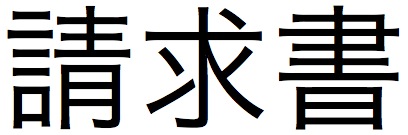
Project Management Lingo – 請求書

The massive amounts of English required for grad school are slowly wearing down my Japanese ability, but I’ve found a couple of conversation partners (one who just returned to New Orleans) and I still get translation work every now and then (and some of those times I can actually fit it in my schedule). I recently did a little work for a company, and just this past Monday a check finally came through for some work I did over the summer. Both of these events reminded me of a critical translation/project management vocab word – 請求書 (せいきゅうしょ).

To break this fool down literally, first we have to chop off the suffix – 書. You probably recognize this as the character that means “write”; it gets tacked on to the end of almost any document. 身分証明書 (ID). 説明書 (instructions). 契約書 (contract). 計画書 (plan). I could go on for a while. So we have a document of a 請求. If we look at the different types of kanji compounds, I believe this is a combination of two different synonyms. Both 請 and 求 mean, loosely, “to ask for, to request,” so the combination together means the same thing – to request. What are we requesting? Payment, of course! We’ve done all the hard work. We’ve looked up words (not too many). We’ve Googled mercilessly and left comments where we couldn’t find an answer about something in the text (not too many). We’ve revised (quite a bit to smooth out our awkward translationing). And now we’ve finally sent the work in. Time to get paid. 請求書, in more familiar English, means “invoice.”

First I’ll address this from a translator’s perspective. Most companies want invoices by the end of the month, so you can save it until then or you can submit the invoice along with the finished translation. I always take the latter course so I don’t forget. If you get a lot of work from a company, then you can save all your invoices and send them together at the end of the month. Companies may charge a transfer fee of $10 or so, and if you are a yen pincher, then you could try and combine several months’ worth of invoices into a single month. Be careful, though – some companies ask that invoices be submitted within a certain amount of time after the translation is completed.

You want to make sure you have all your bank info on the invoice along with contact info and the job number (if you were given one). As a translator, you should expect to get paid a month or two after you submit your invoice. If you finish your work early in the month, then you may end up waiting as many as three months.

As a project manager, when you receive an invoice, the first thing you should do is print it out. At least that’s how we handled it where I worked. Whether or not you print it may be up to the company policy, but you should immediately take the first step toward processing the invoice. Forgetting to file a translator’s invoice properly is one of the most embarrassing things you can do – trust me. Translators help you look good (or at least try to help you look good), and it pays to take care of them. Once I printed and filed the invoice, I always confirmed this fact with the translator so they could have peace of mind.

ちゃんと請求しよう!

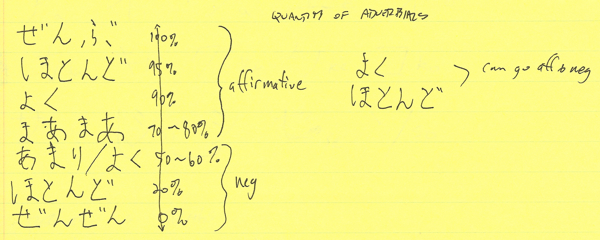
College Japanese Notes – 2001/06/29 Degree Adverbials

Here’s a little lesson from the notes I took during my first year of Japanese class. I took these notes on June 29, 2001, which must’ve been a Friday – my fifth day of Japanese and I’d already learned me hiraganas!

These are all adverbials that you can pair with verbs to express the degree to which you do that verb.

全部(ぜんぶ)食べた                                             [Subject] ate all [of object]
ほとんど食べた                                                          [Subject] ate most [of object]
よく食べた                                                                   [Subject] ate quite a bit [of object]
まあまあ食べた                                                          [Subject] ate a good bit [of object]

あまり食べなかった・よく食べなかった           [Subject] didn’t eat much [of object]
ほとんど食べなかった                                             [Subject] hardly ate [object]
全然(ぜんぜん)食べなかった                            [Subject] didn’t eat any [of object]

Discomfort, the Diminishing Returns of Language Study, and Linguistic Tolerance

I have an article on the Japan Times Bilingual Page today. This time there isn’t much of a language lesson. It’s more of a motivational story-type article, which means you should feel free to disregard it completely. The story I tell in the article is true, and you can see the results of it – I made a video of the pub crawl, and Brian has photos on his site.

I went out with the girls a couple times after that and didn’t experience the same level of linguistic discomfort, so I’m not exactly sure why I had so much trouble that time in Shibuya. The one thing it reminds me of is having good days and bad days in language class. When I was in college, some days everything would go as planned and other days I’d be unable to say anything at all or totally forget we had a kanji quiz. The only thing that matters now is that I powered through it and got to a very comfortable level of fluency. I still have good days and bad days, but I try to soldier through everything the best I can. It’s important to push yourself whenever you start to feel the limits of your abilities, whether it’s reading or speaking or writing. Building linguistic tolerance is a very real thing.

Don’t get discouraged when you start to encounter the diminishing returns of language study. Do whatever it takes to power through. Once you’re on the other side, you’ll probably find out that it was worth it.

Power Up Your そう – さようでございます

I haven’t done a pyramid style list for a Japanese word in a while (not since “Power Up Your ちょっと” to be specific), so I thought that I’d do one for the word そう. I’m referring to the そう used to confirm a question from someone else.

A quick example for those unfamiliar with the term:

A:もう3杯飲んじゃったの?
B:そう。

And now the pyramid:

そう。
そうよ。 *for women and womanly types only
そうだ。
そうです。
そうでござる。 *for people acting in 時代劇 only
さようです。
さようでございます。

The real point of this post is to introduce that last phrase – さようでございます. In very polite situations, そう turns into the slightly longer and more polite さよう. You can follow it with です for a standard keigo phrase.

さようでございます is up for debate on Goo in this post. The spirited first responder claims that it may be grammatically correct, but that he/she did not use it in interactions with customers because そう is so much clearer and less formal. He/she notes that keigo was initially used to distinguish between different class levels, and that overly polite keigo could be viewed as condescending or even insulting.

The second commenter comes to the same conclusion as the others and says that 1) grammatically it’s not a problem, 2) さようです is keigo enough on its own, and 3) just like many bits of language, it comes down to personal preference.

One interesting distinction made by commenter four via a link is that さようでございます is natural when used as emphatic agreement with someone, but very unnatural when used as an 相づち as そうですね so often is. The same link claims that さようでございます has come into more frequent usage because it makes old people feel special, and given the increasing increase in old people, this phrase only becomes more useful.

The first time I remember hearing it was over the phone when I was booking JAL tickets. The phone lady was so nice and patient with me and answered all my worrisome little questions with cheerful versions of さようでございます. At first I wasn’t sure what they were saying, but then it set off bells in some deep memory from a Japanese class and I vaguely remembered learning it.

That said, because of its high level of inherent hoity-toity-ness, さようでございます can also be used in an ironic way in much the same way that 遠慮します can. Steve Martin knew how to take advantage of this kind of humor, and in Japan, the manzai group Hibiki has made a career out of どうもすいませんでした (the line comes at 3:07). In all honesty, and I believe my teacher mentioned this, it’s a phrase that you should recognize but never feel obligated to use. A bit of keigo here and there is fine, but don’t be a keigo otaku.

“The Town and Its Uncertain Wall” – Lastly

With the goal of stirring up even more interest in Murakami between now and mid-October tomorrow!, when the Nobel Prizes are announced, I will post a small piece of Murakami translation once a week from now until the announcement. You can see the other entries in this series here: 1, 2, 3, 4.

Boku has made his decision to leave the Town. He chooses to stay true to his dark dream, his dark mind – his shadow – rather than stay in the Town with kimi. This is the opposite of the result of Hard-boiled Wonderland, where he stays because he cannot “forsake the people and places and things I have created” (399). This shows the crucial difference between the Town in the two texts – in Hard-boiled Wonderland, the Town is clearly part of boku, but in “The Town and Its Uncertain Wall,” I think it’s actually kimi: Boku is unwilling to lose himself in another person, even if it means a blissful and sincere connection with another.

So he jumps.

And on the other side, here is what he has to say:

Lastly

Words die.

Every second words are dying. Words die in alleyways, in attics, in the wilderness, and in waiting rooms at stations with the collar on their coat still turned up.

What can I communicate to you? Everything disappears like hitting a light switch. Click – OFF. That’s the end.

I’ve buried too many things already.

I’ve buried sheep, cows, refrigerators, supermarkets, and words.

I don’t want to bury anything else.

But nonetheless, I must continue to speak. That’s the rule.

**

Long ago I chose the Town surrounded by the Wall, and in the end I abandoned it. I still don’t know whether or not it was the right thing to do.

I survive, and now I’m writing this. The stink of death still surrounds me. I sleep with dark dreams, and I wake with dark thoughts. The path I walk is dark, and it gets darker with each step I take.

Everything is being lost. It will continue to be lost. The songs that moved me long ago are gone, and the scenery that gently held me is gone, too. The silent darkness also blots out a huge number of endearing words.

But I have not a single regret.

I think of the Town surrounded by the Wall as I watch my shadow stretched out on the wall of my room (now with nothing to say) in the long, dark night. I think of the tall Wall, of you under the faint light bulbs in the Library, of the beasts and the sound of their hooves echoing on the streets, of the willows swaying in the wind, and of the chill winter wind that blows through the factory street empty of all people.

There’s nothing more I have to lose. That’s my only salvation. Like the wind I felt when I was sixteen, everything passes through my body. I did lose the Town, but my thoughts remain in the Town somewhere even now.

Forever…, you said. Forever. I won’t forget you, just as you won’t forget me. Thoughts of the riverside in summer, and thoughts of the bridge in winter when the wind blows.

Forever…

**

On a cloudy autumn evening, I suddenly hear the echo of the horn. The sound must make it to my ears through a gap somewhere in that uncertain Wall. Riding on the cold wind that blows down from the Northern Ridge.

This concludes Murakami Month 2010. Watch the Nobel Prize announcement tomorrow, and look for more translation next year.

“The Town and Its Uncertain Wall” – Saying Goodbye

With the goal of stirring up even more interest in Murakami between now and mid-October, when the Nobel Prizes are announced, I will post a small piece of Murakami translation once a week from now until the announcement. You can see the other entries in this series here: 1, 2, 3.

The illusion has ended, and boku and kimi are back in the archives of the Library. They walk outside, and he tells her what his decision is.

How much time has passed? When the last bit of light has disappeared and the original darkness returns to the archives, we leave without a word, turn off the Library’s lights, pass through the long hallway, and go outside.

It’s night and the wind has stopped; a strangely clear and quiet starry sky expands above our heads. Silently we walk the road along the river and as always stop at the middle of the Old Bridge to watch the river.

“When I met you… When I met your shadow, I was sixteen years old,” I say facing the dark surface of the water. “That year was a really mysterious year. I felt like everything just kept on leaving me behind. It was like everything just passed right through me… The first time I met you was at some party. Somebody’s birthday party maybe, something like that. I only spoke a couple words with you, but when I did, I felt like the world suddenly opened up right in front of my eyes.”

You take a few steps away from me and stare at the surface of the water just like me.

“And for months after that, I was thinking only about you. Every day was really tough…for those months until I built up enough courage to call you on the phone. Sometimes I felt like I could get anything I wanted, and other times I felt like I couldn’t get anywhere even with all the time in the world. Sometimes I had an incredible desire to sleep with you, and other times I was satisfied just watching you from afar… And as those months passed, in my mind you became a symbol of living. Or maybe of living on. I was living within that dream. I breathed, ate, and slept that dream. Do you understand those feelings?”

You nod slightly.

“Of course, these are just words to everyone. Maybe they don’t mean anything at all. But it’s just, I really wanted you to understand. Dreams, no matter what kind they are, are all dark in the end. If you say that it’s a dark mind, it’s a dark mind. Just mud that I made up in my head and sprinkled with gold dust. That kind of dream won’t take anyone anywhere. Just like the water that flows down into the pool, they just wander forever in dark subterranean channels with no destination.”

I cut off my words and look at the side of your face. You don’t move at all and keep your eyes fixed on the surface of the water. Only the murmur of the water hitting the rock of the sandbank surrounds us.

“I’ve lived with these thoughts for far too long. I also feel like they’ve only brought me suffering. But the thing is, I’ve gotten too old to get rid of these thoughts. Even if the long hallway I’m walking down has no exit, I think my real self can only be there. I couldn’t live with myself if I abandon my dark dream there, no matter how dark the dream is. I wouldn’t be the real me anymore if I cut myself off from it.

“As long as I’m with you like this in the Town, there’s nothing more I could want. This is the first time I’ve ever felt like this. I’m not anxious or depressed whatsoever. It would probably be like this forever. But even now, time continues to pass outside of the Town. Both the beasts and the shadows die. That won’t leave my mind like a stubborn stain on a shirt.”

Most of the water spills from my palms. Yet I mustn’t stop sharing.

“I’m going to leave the Town with my shadow. It’s going to be incredibly painful to leave you. I wanted to live with you in the Town forever.”

“Was the sixteen year old me that amazing?” you ask me, lifting your head.

“Absolutely. Like a dream.”

Then I hold you. I feel streams of hot tears on your cheeks.

“I’ll remember you forever,” you say. “Forever. That’s the only thing I can do for you.”

“Goodbye,” I say.

“Goodbye.”

**

I stare at the dark surface of the water even after she disappears off into the darkness at the end of the Old Bridge. And when a new sun sneaks a white color into the eastern sky, I return to the residences on the hill and slip into my empty bed.

Toward the end there are references to the very beginning of the story where boku talked about how words die. They spill through his hands as he attempts to hold them. The Town seems to represent a sort of ideal connection with a person. While it enables a satisfying relationship with kimi, it also threatens boku’s individuality. As he starts to describe his feelings, the narrative boku starts to show through, and we get hints of some other reality with birthday parties and phone calls. Boku has realized that he must go back to this reality, where kimi no longer exists, perhaps because she is dead. I’ve translated boku and his shadow’s escape from the Town here, and next week will be the postscript to the story.

“The Town and Its Uncertain Wall” – Old Dreams

With the goal of stirring up even more interest in Murakami between now and mid-October, when the Nobel Prizes are announced, I will post a small piece of Murakami translation once a week from now until the announcement. You can see the other entries in this series here: 1, 2.

It’s hard to pick the other passages to share – the story is long, and there are a number of parts that differ from Hard-boiled Wonderland. I think getting to the end is important, though, so I’ll fast forward through the central part of the tale, which unfolds mostly as it does in the novel – boku maps out the Wall a little, explores the dreams at the Library, starts a relationship with kimi (very different from the novel), meets up with his shadow which has begun to weaken, and realizes that he must help his shadow escape from the Town.

Before he does, he takes kimi into the archives of the Library and illuminates all the dreams. In the novel, this was to unravel the Librarian’s mind from all of the dreams. In “The Town and Its Uncertain Wall,” there’s a markedly different result:

All of the old dreams are awake.

“There’s no way, how can this…” you say in a daze. Yes, exactly. The old dreams have had all of their existence torn away from them. Words torn from their voices, light torn from their eyes, and dreams torn from their sleep.

“There’s no way.”

Or maybe we’re both seeing the same illusion in the deep darkness of the archives. But even if this is an illusion, it’s an illusion that the old dreams in the room have mustered their last bit of strength to unfurl for us.

I go with them down into a deep, hole that’s been dug in the ground. It’s a place where everything is ruined and everything is lost. The river has dried up, the hill has crumbled, and the light has stopped. The road I follow is surrounded on both sides by steep cliffs filled at the bottom with heavy water that gives off a rotten smell. There are no stars nor moon, and only a slight amount of dust-like light spills out from within the earth, causing the outlines of the surrounding scenery to just barely float up.

The thousands of old dreams stand in front of me and guide me through the surroundings. I walk slowly so as not to miss a step on the sheer road. I can see endless rows of troops marching in the opposite direction as me on a road on the opposite shore of a lake. They have no heads on their shoulders. They occasionally expel white breath from a gaping, black hole in the middle of their shoulders like they are breathing.

The old dreams continue on the straight road. As they proceed, the seasons change, years pass. Only the darkness remains the same. Several of the soldiers call out to me. They call out with gurgling sounds from the holes in their bodies.

I am all alone. I’ve lost sight of you. I yell out your name as I walk, but there is no reply. The only response is the mocking gurgling sound from the soldiers. The old dreams continue.

“Wait for me,” I yell. “I have to wait for her.”

The old dreams don’t answer and just continue their endless flashing. I can’t stop either. This is not my place. This is their country. My feet, heedless of my will, continue after the old dreams. All sorts of rubbish lines the side of the road. I recognize all of it. Several dozen dead cats with their fur all rigid staring into the void. Broken, faded toys buried in dried mud with their arms pointing up into the air. Old sports shirts that have had cigarette marks burned into them hanging from the branches of trees.

Time passes as I continue on the road. My eyes hollow, my hair falls out, and my teeth rot. Deep wrinkles appear all over my skin, and I have to convulse my entire body to take even one breath.

“Stop,” I yell. “Please, enough. Stop!”

But the old dreams still continue. Suddenly the road ends. When I realize it, I am standing on a deserted rocky scrag. No longer is there any water or soldiers in the area around me. It’s almost like I’m standing at the bottom of a deep well. The ceiling is infinitely high, and far above in that darkness overhead is a small white hole the size of a pinprick. It is the light of the sun.

Nothing in the world is as amazing as the light from the sun. Don’t you think?

Indeed, colonel. Indeed.

Tears spill from my eyes. The tears turn to salt crystals and fall to the ground, collecting on the scrag. At that point the old dreams lose their light one after another like they’ve burnt up. When they lose their light, they fall to the ground quietly like a feather. And when the last bit of light is sucked away into the air, the area is covered by a pitch black darkness. The white light in the ceiling is already gone. And everything ends.

I’m not exactly sure what this momentary transportation means. Perhaps that dreams, and the mind, continue on heedless of the casualties it leaves behind, even oneself. Murakami cut the passage for the novel. No need to worry – in next week’s installment, both boku and kimi survive the illusion and retreat to the banks of the river to talk.