号外 – 1Q84 Part 3 Reserved

I was at 有隣堂 today and noticed that they have started taking reservations for 1Q84 Book 3. The signs say that they expect it to sell out immediately. Here’s what my reservation slip looks like:

The price is 1995 yen, almost 200 yen more expensive than Book 1 and 2, which makes me wonder if, Egads!, this part is longer than the first two. Nothing would surprise me at this point.

No payment is necessary up front, so get to your closest 本屋 and 予約 a copy for yourself. The book will be released on April 16.

Starbucks New Year’s Mugs 2006 – 2010

I’ve spent the past five Christmases and New Year’s in Japan, and one of the most exciting things about the season is the release of the annual Starbucks New Year’s mug. Yes, I’m a consumer whore.

These mugs are unique to Japan and are released on December 26. I’ve noticed that they sell out faster and faster every year. In 2006 I bought mine in Shinjuku well into the New Year. The past couple of years, I’ve had to scramble and visit multiple stores to find enough for gifts and for myself. Here’s what they look like.

2006:

2007:

2008:

2009:

2010:

I think my favorites are 2008 and 2009.

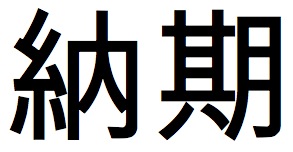
Project Manager Lingo – 納品 & How to Engrish

When I joined my company in 2008, I started work on a Thursday. I figured that would give me a nice two day period to get used to things before I had to tackle a full week. After very little in terms of orientation or introduction, they had me busy with an intense check of some business reports for a steel company. On Friday at the end of the day, one of the three other project managers said, “Oh yeah, Daniel. You need to fill out your shoehole.”

Shoehole? I thought. OK, sure. What’s a shoehole? “Here I’ll forward you mine.” Oh, it’s a weekly report or something. Cool. I managed to use my coworker’s template to fill out the work I’d done and then send it to the right people.

For the next few weeks, I updated my “shoehole” file diligently, still kind of wondering what the hell “shoehole” meant. I thought maybe it was some kind of compartment where employees used to deposit written reports in the 19th century, a term lovingly carried up to the present day, that I had been unaware of for 27 years.

At some point I finally realized what “shoehole” actually meant – 週報 (しゅうほう), weekly report. I place some of the blame for this on my own idiocy and the other guy’s pronunciation, but a lot of it is due to the office attitude, which was (and still is) one of doing for others rather than helping others learn how to do a better job. I’d been saying “shoehole” to everyone for a few weeks…and not a single correction? Maybe expecting an explanation of 週報 is a little much, but 90% of what I’ve learned on the job has been trial and error. The other 10% has been from questions I asked others. No one, not even other project managers, has gone out of their way to make anything easier, and I’d even say that the way information is kept from employees makes things more difficult and provides no incentive to be creative or efficient.

So in response to the apparent interest in project management and freelance translation last week, I’ve decided to start introducing some project management vocabulary, hopefully to arm you all with information I wish people had taught me. These will be useful to translators as well, especially if you are trying to communicate with a Japanese project manager or client.

The first word is the most important – 納品 (のうひん). This is a complex way to say “deliver.”

翻訳をクライアントに納品しましたので、やっと帰れます!
I delivered the translation to the client, so I can finally go home!

今日納品が三つあって忙しい。
I’m busy today – I’ve got three deliveries to make.

Pretty simple once you get it down. The compound is in the pattern VERB + DIRECT OBJECT (品を納める) and combines the character for product (品, しな) with the multifaceted 納, which can mean send, pay, store, and settle, amongst others. It might help if you think of it as “take care of.” That covers a wide range of actions. As you can see from the above examples, it can be used as a noun or a verb.

(NOTE THAT IT DOES NOT MEAN DELIVERY OF TASTY THINGS LIKE PIZZA. That would be 配達.)

A similar and also very useful word is 納税 (のうぜい) which means, using my little hint, “take care of taxes” – pay taxes.

Today is also the debut of my new Japanese site – How to Engrish. Essentially it’s the exact opposite of this site. My goal is to practice writing Japanese and hopefully to make English easier for Japanese people to learn.

I’ve got the Japanese-English language pair covered. Now just to employ an army of linguists to cover every other possible combination. There’s no reason why learning a language should be so difficult – millions of people speak them without any difficulty whatsoever, and a little insight provided by a teacher in the student’s native language can have a great effect. Language study is not a competition, and we should all make an effort to be more understanding with learners: any language mistake diminishes me, because I am involved in language. (It’s still OK to laugh at mistakes though.)

I’ll be going through some major changes in the next few months, so I’ll only post once a week at How to Engrish, and I plan to cut my posts here at How to Japonese down to two a week for now (starting next week) and possibly one a week with the occasional 号外 post. 2010 is certainly turning into an exciting, aggressive year: keep your hands and feet inside the vehicle and secure all children and personal belongings.

Collabo-Ramen – 魚雷

I got in touch with Brian last summer to see if he wanted to do some collaborative video reviews of the ramen shops he was visiting for his site Ramen Adventures. He’s got solid pictures of everywhere he visits, and it’s hard not to get hungry while you read through his posts. (He also posts his photography on his other site, Gaijin Bash, and makes every trip he takes look awesome.) We’re both busy dudes and were unable to get around to it until last weekend when we managed to check out 魚雷 (ぎょらい), a new shop over near the Tokyo Dome. (魚雷 means torpedo. Pretty cool, eh?)

The result is the first installment of Collabo-Ramen:

Collabo-Ramen – 魚雷 Gyorai from Daniel Morales on Vimeo.

For me, the bowl was really refreshing. The noodles were a little soft but definitely handmade. I can’t remember the last time I had noodles like that. And the soup had a lot of flavor but was light enough to drink down to the bottom of the bowl. The grilled chicken and the chashu were also highlights – small bites, both of them, but delicious.

Read Brian’s review here. You can see another review of the shop here at Go Ramen. It’s definitely worth stopping by if you’re out that way. They’re going to start serving gyoza at some point in March, so maybe it’s worth another visit then.

Who Dat?!

Speaking of Subway, I often pick a footlong after lunch and keep it in the fridge at work. I get super hungry right around 6, so they’re nice to have on days when I have to work overtime. After the boss man has left (“the Syach,” as we like to call him), I sneak over to the tables that are cubicled off in the corner of the office and eat half. I save the other half for a little later when everyone has gone. (Quick sidenote: in Japan, a full sandwich is listed as 30cm but still gets the designation フットロング.)

On Monday I was eating the first half of my sandwich, just staring out the window, when one of the Sales guys peeked his head in and laughed. I think I mumbled something like ごめんなさい, and he said いえいえ、誰かな~と思って… and then left.

The meaning of what he said is pretty straight forward here. Literally “Who is that? I thought…” Or in more natural English, “I was wondering who that was…” The point I’d like to make is that this is not a complete sentence in Japanese. He easily could have said 誰かなと思った, but instead it ends on a gerund, and much like the で discussed last week, there is a bit of causality implied. This makes more sense when you fill in the final clause of the sentence: 誰かなと思って、顔を覗かせた。In natural English, “I just peeked in wondering who was in here” or maybe “I just wanted to see who was in here.” (Other alternative second clauses include, ここに入ってきた or ちょっと見てきた.)

The point is that while the gerund clause modifies the implied, invisible clause, it’s the main point of the sentence since the implied, invisible clause is obvious to both parties. Most excellent. It also reminds me that you could probably go a whole day in Japan using only gerunds. Reminds me of my No 僕 Challenge, but I’m too lazy to try this one.

And for those who didn’t recognize the title, Geaux Saints!

“Veggie” Dog

Subway in Japan is true to the spirit of the original American store. While they don’t have the “melt” sandwiches or the “Five-dollar Footlong” (footlongs range from 600 yen to 810 yen), the core group of offerings (Smoked Turkey, Ham, Roast Beef, Veggie, Subway Club, Egg, Tuna) is the same, and they have a few regular sandwiches special to Japan (Tandoori Chicken, Shrimp Avocado). Besides these two, there are the seasonal sandwiches that get changed every couple months or so. Since I moved to Tokyo in 2008 (and began to eat semi-regularly at Subway again) these have included Chili Beans, Avocado Turkey, and the heavenly Double Pastrami.

The current seasonal sub offerings are the ベジバーグ (bejibaagu, an approximation of “veggie burger”) and the ベジドッグ (bejidoggu, “veggie dog”). I was pleasantly surprised to see these available: Japan is not a very vegetarian-friendly country, but it is slowly starting to change and this is one of the signs. Clearly these are being advertised to healthy eaters:

I tried the ベジバーグ a few times and was moderately satisfied. For whatever reason, they won’t add all the veggies – just tomato, lettuce and bell peppers in addition to the patty. But then they douse it with special ginger sauce. It’s decent (and makes me feel less guilty for eating so much tonkatsu). They give out a flier with coupons too, and as I was perusing it I noticed something funny about the ベジドッグ:

ベジドッグ is Iwate Prefecture pork! I was stunned. If you read their equation carefully, the “ベジ” must refer to the six-vegetable ratatouille (ラタトゥイユ) that they use as a topping. A scoop of ratatouille does not a veggie dog make. Japan clearly has  issues to work out before it fully embraces vegetarianism.

How to Peel

One of my roommates recently corrected the mikan peeling technique I introduced in this video. Apparently I was doing it upside down.

This little, green nub is so inviting:

And when you flip it over it’s deceivingly flat:

But when you open it:

There’s a surprising little space that you can sink you finger into:

Then peel as normal. Ta da:

You can see the little piece of white stuff that goes through the center of the mikan and is attached to the green nub. It removes cleanly when you peel it this way. Nice.

Cool Particle – で – Conjunction

Clearly Treyvaud’s で from the previous post (about で as implier of causality) wasn’t pure causality. The girl was just taking a break from her story, so the invisible それ in front of the で refers to the entirety of the story so far. Not a specific cause and effect relationship per se.

A large part of で’s role comes as a conjunction, a transition between two thoughts. To a certain extent, で is always conjunctive – it connects two different phrases or ideas within a phrase by describing why something was done – and only the level of causality changes.

The clear English equivalent is “so.” It’s surprising how similar these are. Not only do they both act as conjunctions, but the level of causality they both imply also varies. So, to a certain extent, Treyvaud’s で is asking, “So now that you’ve laid out all this juicy conspiracy goodness, WTF mate? What happens next? What does what you’ve just explained lead to?” But in reality, it’s just a word that enables a smooth transition to the next thought.

You see this used a lot in spoken Japanese. If someone is telling a really long, winding story that, rather than resolving itself, continues to take turn after turn, that person and the listener could have the following conversation:

Teller: でー
Listener: で?
T: でー
L: で?(笑)
T: で、

Which you could translate into English as:

Teller: So–
Listener: So?
T: So–
L: So where the hell is this going?! Heh.
T: I’m about to fuggin tell you if you’d let me finish.

Maybe that’s taking it a bit far, but you get the point. You can imply all that good stuff by interrupting with a single particle, a smile, and a good laugh.

The other conjunctive role of で is when you use it to stack up clauses, mostly when speaking. For example,

会社が新橋で、アパートが国分寺で、通勤がちょっとつらい。My company’s in Shimbashi, and my apartment is in Kokubunji, so my commute is a little unpleasant.

To me, the “so” feels like it implies slightly more causality than the で after 国分寺. I believe in cases like the above, で is the gerund form of です, so you can continue almost without end as you can with verbs sometimes:

6時に起きて、シャワー浴びて、朝食食べて、家出て、電車乗って... I woke up at six, took a shower, ate breakfast, left my place, got on the train…

Keep your ears open for this で (and verbs in gerund form playing the same role) and I promise you’ll start to hear it more often. And the more you recognize it and what it is doing, the easier it will be to use it yourself. Now go forth and conjunct!

Cool Particle – で – Causality

My brothers came for a visit over the holidays, and we had a small 手巻き寿司 party in their honor. One of my roommates brought his genki new girlfriend, and she brought her own even genkier girlfriend who is extremely interested in conspiracy theories. I don’t know how the subject came up, but it turns out that Treyvaud, also in attendance, is a descendant of a freemason. When she learned this, genki girlfriend’s genkier girlfriend got really excited and proceeded to explain an elaborate conspiracy theory only to be distracted midway through by a particularly tasty-looking slice of maguro.

When she finished eating, Treyvaud prompted her to continue her story with a simple, little で? It was awesome – so simple but perfect for the situation and extremely effective. She then said, “で…” and then continued her story.

This is a great example of the two different roles of で – conjunction and implier of causality.

Today let’s look at how it implies causality. The most common examples are ので and それで。 They have essentially the same role, but ので works between two clauses in a single sentence whereas それで begins a new sentence. Observe:

ビールをいっぱい飲んだので、眠くなった。
I drank lots of beer, so I became tired.

In more natural English: I got tired because I drank a lot of beer. (It’s tempting to maintain Japanese sentence order when you first start translating, and I’ve produced some embarrassing examples myself, but I think it’s fine to flip stuff around BECAUSE ENGLISH IS A DIFFERENT LANGUAGE.)

A couple of usage notes:

– You may be familiar with から in a similar role. (ビールをいっぱい飲んだから、眠くなった。) They are very similar. The main difference, according to my Japanese teacher in college, is that ので is more polite than から and should be preferred when talking to people more えらい than your measly self.

– After verbs, all you need is ので, but after nouns you should use なので. For example: 月曜日なので、仕事に行かなくてはならない。 I’s Monday, so I gotta work.

– In spoken Japanese, ので often gets slurred to んで. Example: 明日するんで、心配するな。I got that shit covered tomorrow, yo, so just chill.

And the それで variety:

代休は、使わないと、3ヶ月間で無効になってしまう。それで、来週の水曜日半休をいただいて、映画見に行こうと思っている。
If you don’t use them, compensatory vacation days expire after three months. So I’m thinking of taking a half day off next Wednesday and going to see a movie.

In both cases, the で acts as a police officer blowing his whistle and pointing an accusatory arm to the left. This! This is why that stuff to the right is happening!

Let us speak of で’s conjunctive abilities next time.