On the final episode this season, I talk about the importance of celebrating your little victories as you study a language. And in Japanese, I think about how to balance introversion and extroversion as you’re studying. Listen until the end – I provide a short update on one of the episodes from Season 1.
The next chapter is ヴィラ・トレコリ (Villa Tre Colli), a very short chapter. Just four pages, probably a third of the length of most other chapters in the book. And for good reason – Murakami is dialed in as he finished the first draft of Norwegian Wood. He doesn’t have the time or energy to write anything else, as we’ll see.
He’s staying in Villa Tre Colli, an aged hotel on the edge of the city. It looks out over the Ministry of Foreign Affairs building and the Stadio Olimpico, and he can hear the crowds at soccer matches cheering.
I felt like this couldn’t be the same place, but the location tracks (it even has a Facebook Page). You can see the Stadio Olimpico and Foreign Ministry on the map, and the Google streetview cuts off at the entrance to the gate, suggesting that once you go through the gate you have to climb a hill. Pretty cool.
At any rate, here’s what Murakami has to say about finishing the first draft:
I finished the first draft of the novel on March 7. March 7 was a frigid Saturday. Romans call March a crazy month. The changes in weather and temperature are random and sudden. The day before can be a pleasantly warm spring day, yet overnight it will be back to mid-winter. That day I woke up at 5:30, did a quick run in the garden, and then wrote for 17 hours without a break. I finished the novel just before midnight. Judging from my diary, I was predictably exhausted; I wrote just a single sentence: “It went really well.”
I called Kinoshita Yoko with Kodansha’s publishing division to tell her I’d basically finished the novel, and she said there was a trade fair for picture books in Bologna at the beginning of April that someone from Kodansha’s international team would be attending and asked whether I might be able to hand over the manuscript directly to them at the fair. I think the book’s pretty good, I said, and she said “Oh yeaaah? It’s 900 pages? Are you sure it’s that good?” with some doubt in her voice. She’s a bit of a skeptic.
This is pretty awesome detail that Murakami includes. I’m sure Jay Rubin must have written about this in his book, but it’s very cool to read about it in Murakami’s own words.
And just imagine being that Kodansha staff, taking the manuscript in Bologna and then having to transport it back to Tokyo. I imagine that Murakami had his rough draft material, but I wonder whether they would have been able to make a full copy or if the one on the plane back to Japan was the only one in existence.
Speaking of drafting material, Murakami goes on to explain his editing process, which is fascinating:
The next day I started on the second draft right away. I took the draft that I’d written in notebooks and on letter paper and rewrote it completely from the beginning. I don’t mean to brag, but completely rewriting a draft of 900 400-character pages with a ballpoint pen isn’t the type of work you can do without endurance. I finished the second draft on March 26. I was really hurrying because I had to finish before the book fair in Bologna, so by the end my right arm was so tired I could barely move it. Thankfully, I don’t usually get tight shoulders, so my shoulders were fine, but my arm was shot. So when I had any down time, I was careful to do push-ups on the floor. Writing a full-length novel is far more labor-intensive than most people might think. Thanks to the introduction of the word processor, it’s gotten a lot easier these days…
I’m not sure what the goal of doing push-ups is. Maybe to keep his arm active, to keep his left arm working as well?
This is really the first close look I’ve gotten at Murakami’s revision process. After the second draft, he goes through it again with a red pen, although he doesn’t mention if it gets another rewrite after that. I would imagine not.
He settles on the title “Norwegian Wood” two days before leaving for Bologna. This is also a bit surprising, as in recent years I believe Murakami has mentioned that the title of his novels is often a starting point. But we know he was working from the short story “Firefly” in this case.
So what do we know? We know that the Murakamis left for Europe on October 4, 1986 and that he complete the first draft of Norwegian Wood on March 7, 1987. At the beginning of this chapter, Murakami mentions that they’ve been in Europe for four months, so he may have been writing at Villa Tre Colli for that fifth month. No matter how you calculate it, it’s an impressive task. Murakami takes a solid short story and turns it into a generational novel in 150 days. While living abroad. In temporary housing across the Mediterranean, with storms flooding the apartments and drafty walls letting in the cold. Say what you will about his decline in recent years, Norwegian Wood has a pretty cool creation story, and it’s a shame that more of the world hasn’t read about it in Murakami’s own words.
Jens Petersen has been working in real estate in Tokyo for over 13 years. He initially found interest in Japanese independent music. In recent years his interest has also branched out into the art world. We spoke about learning Japanese, finding an immersive environment, and job hunting at job fairs.
Welcome to Murakami Fest 2021! This year I’ll be looking at five more chapters from 遠い太鼓 (Tōi taiko, Distant Drums), Murakami’s travel memoir from Europe. Another fascinating set of chapters! Murakami is finishing Norwegian Wood and traveling through Italy. We get some great details about the writing process.
This is Year 14 of the fest. Where has the time gone? Here are the previous entries:
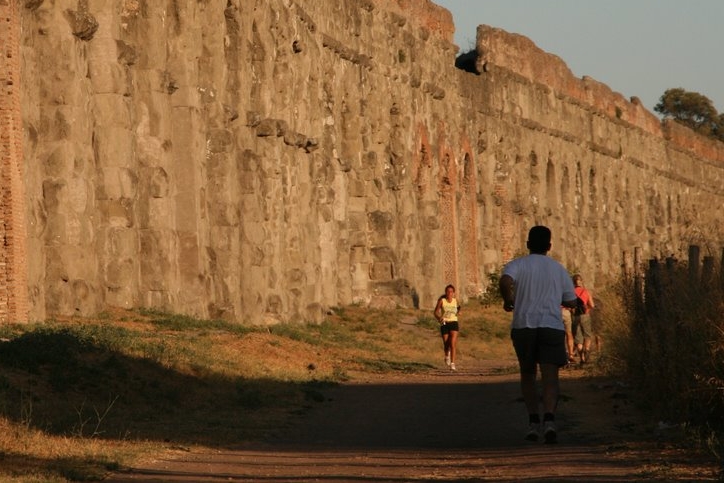
In 南ヨーロッパ、ジョギング事情 (Southern Europe, The Jogging Situation), Murakami writes about his experience jogging in southern Europe. Jogging is city culture, and even large cities like Rome are slower-paced and not as quick with trends, so the customs here seem to annoy Murakami. People ask him questions about what he’s doing, he gets chased by stray dogs on his way from his housing to areas where he can jog, and the people who do jog seem obsessed with jogging in groups and chatting while they jog, not something Murakami the running fanatic is interested in.
There’s a nice section at the end of the chapter where Murakami talks about how he takes in a city through jogging; driving is too fast, so you lose the details, and walking takes too much time, but with jogging you can cover ground and still get a good sense of the culture. It brings us to this nice passage he uses to end the chapter:
Just as a certain type of people always go to local bars when they go to an unfamiliar place and another type of people always sleep with women when they go to an unfamiliar place, I always run when I go to an unfamiliar place. Through running, I try to feel what only I can feel. Sometimes it goes well, sometimes it doesn’t. But still, I run. If for no other reason, I love running, so it’s pleasant to run in an unfamiliar place. It’s like opening up a fresh notebook to the first page.
This is a nice passage, but there’s that one line that’s a little off, no? The way some people sleep with a woman whenever they go somewhere new? This feels pretty dated.
There’s an earlier passage in the chapter in which Murakami talks about the Italian approach to jogging. He tells a story he heard from someone in Malta: Other than eating, talking, and seducing women, Italians never try to do anything very hard, his Maltan friend says. They’ll never win a war. After an extensive quote from this source, we get back to Murakami’s opinions:
I believe this, too. This is one reason Italy is a nice country. And in a country like this, people don’t just run for no reason.
In Germany, even prostitutes go for a morning run. It might sound like something out of Murakami Ryū’s New York City Marathon, but I’ve actually spoken to such a prostitute in Hamburg once. She said she ran around the Alster Lakes every morning. I was running the same path, so I decided to ask how long it took her, and it was a pretty respectable time. That’s amazing, I said, and she shrugged and said, my body is an asset. That’s right—for both prostitutes and novelists, their bodies are an asset.
Murakami continues to show his obsession with physical exertion as a metaphor for writing. This is an odd comparison. And the sociological premise also is somewhat questionable. So maybe not his finest work here. Maybe we can chalk it up to being the 80s and Murakami having some culture shock? But some of this is Murakami through and through.
On a total side note, Murakami Ryū has a pretty cool website with a trailer for the book that gets mentioned, which is apparently about a prostitute who attempts to run the New York City Marathon.
There is an official order to the 都道府県 (todōfuken, prefectures) in Japan. I share some thoughts about it and in Japanese discuss the importance of learning how to really devour (貪る, musaboru) your Japanese studies.
Molly Des Jardin is a language and computer nerd who came to study Japanese, and later book and media history of modern Japan. She quickly got sucked into both for the long term and enjoyed the ‘B-kyu’ adventures she got to have while working or studying in Fukuoka, Yokohama, and the least cool wards of Tokyo.
Check out lists/galleries of back issues here and here.
土木フォトグラフィ (Doboku Photography) (Not mentioned in the pod, but recommended Instagram account from Daniel for infrastructure.)
Courtesy of Molly, this is a photo of Ozaki Kōyō’s four-volume 紅葉集 (Kōyōshū), pub. Shun’yōdō (春陽堂) 1909 and how one who access the original text (in its original binding!).
Extra extra, read- er, hear all about it! Special edition of the How to Japanese Podcast! This is an audio version of a presentation I gave to departing JETs at the Consulate-General of Japan in Chicago. Usually I’m able to drill the JETs to get them speaking a little Japanese. Obviously it’s virtual this year, so I recorded a version to use as reference. This material might be useful for others interested in teaching in Japan. Follow along with the slides, which can be accessed here.
What’s something that surprised you about Japan that was completely ordinary? For me it was the access to swimming pools. Living in Japan changed my relationship with swimming for the better. And in Japanese, I talk about 趣味 (shumi, hobbies/interests) and their role in Japanese study.
Mike Grant is the co-founder of Devil Craft brewing and has been operating in Tokyo for 10 years as of this year. Devil Craft has four locations in the Tokyo area. See Craft Beer Professional’s interview with Mike here.
“Learning by ear” + Six months of classroom Japanese after an initial stint in Japan
Practicing and “playing around” by imitating accents in English
Being able to take criticism of both language skills and brewing skills
The Katakana Fallacy is the mistaken belief that katakana are more difficult to learn than hiragana (and maybe even kanji?!). A closer look at what drives this believe helps explain why Japanese is, in fact, the easiest language in the world. And in Japanese, I talk about linguistic crutches and how to avoid them.
I’ve been writing about the ideas behind the Katakana Fallacy since this post in 2008. And this is the Anki deck of katakana words that I mentioned might be helpful.




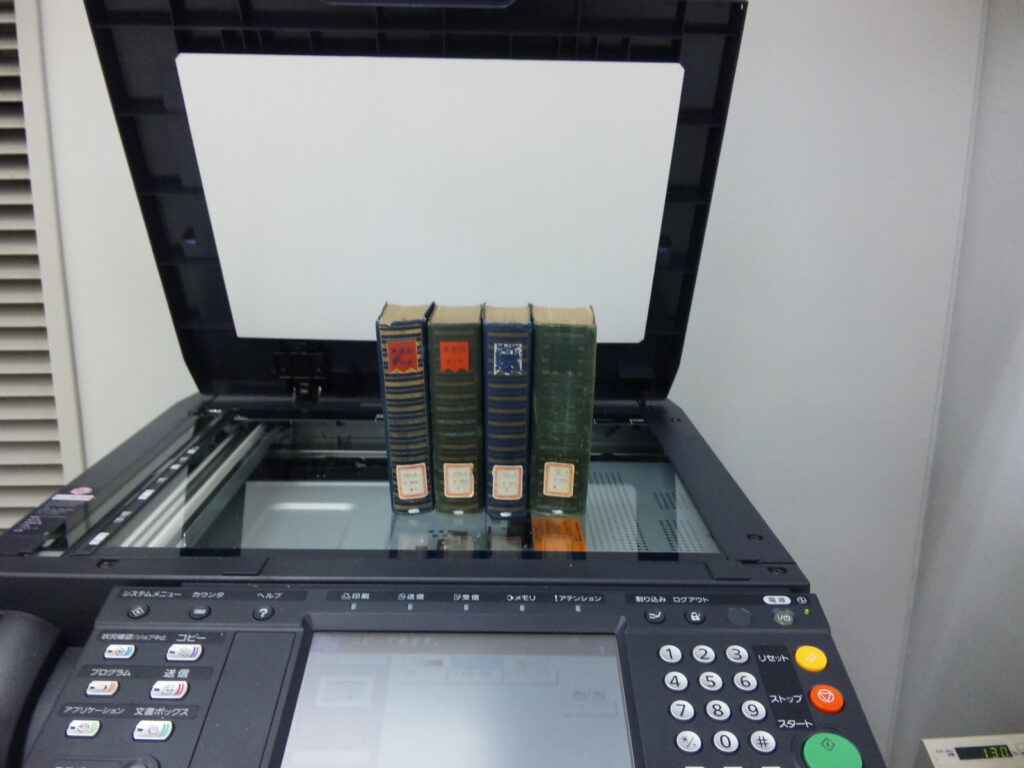 Courtesy of Molly, this is a photo of Ozaki Kōyō’s four-volume 紅葉集 (Kōyōshū), pub. Shun’yōdō (春陽堂) 1909 and how one who access the original text (in its original binding!).