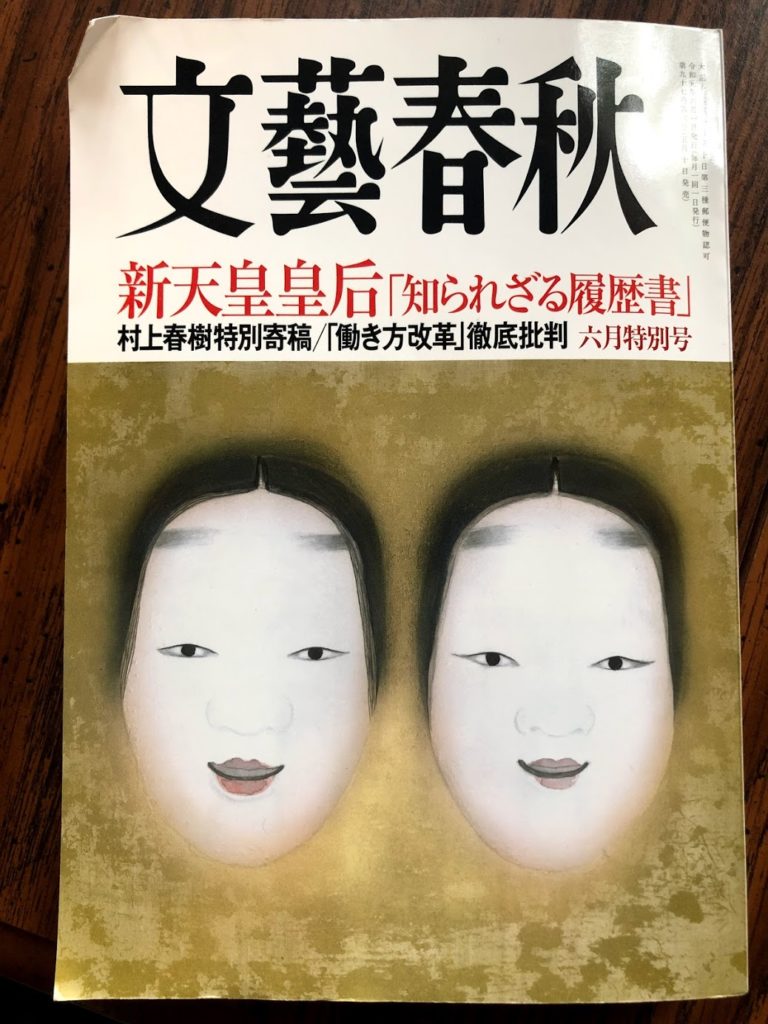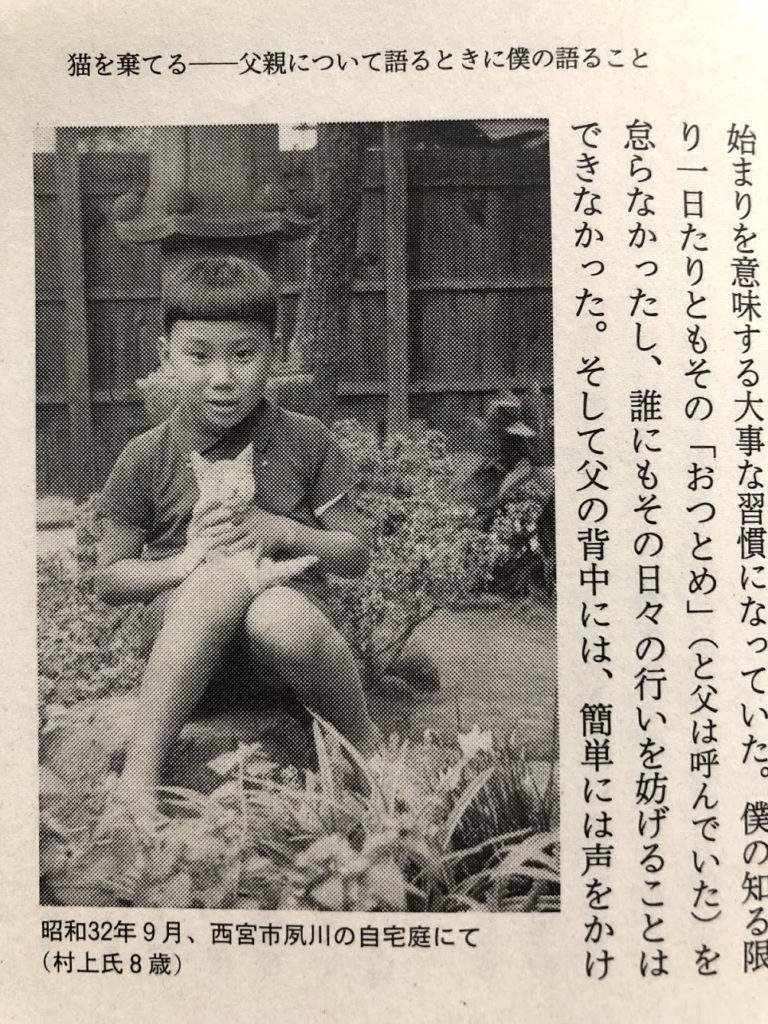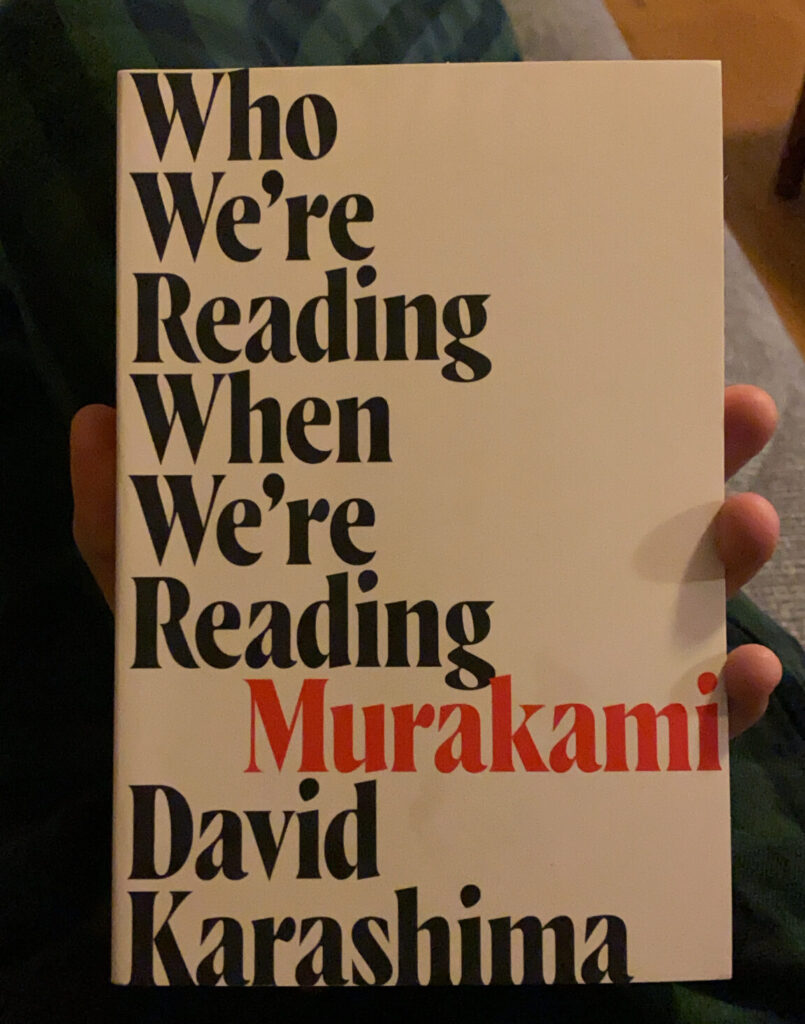
How to Japanese

How to Japonese
How to "Get Used to" Japanese

Archive for the ‘literature’ Category

« Older Entries

“The Town and Its Uncertain Wall” – Lastly

Wednesday, October 6th, 2010

With the goal of stirring up even more interest in Murakami between now and mid-October tomorrow!, when the Nobel Prizes are announced, I will post a small piece of Murakami translation once a week from now until the announcement. You can see the other entries in this series here: 1, 2, 3, 4.

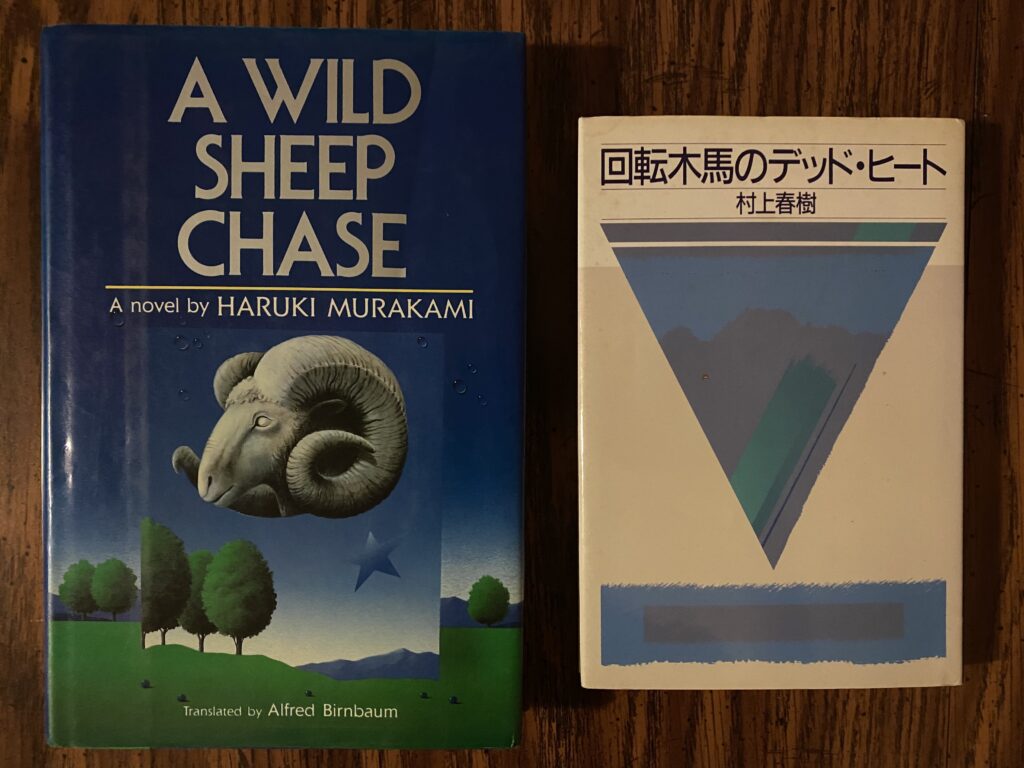
Boku has made his decision to leave the Town. He chooses to stay true to his dark dream, his dark mind – his shadow – rather than stay in the Town with kimi. This is the opposite of the result of Hard-boiled Wonderland, where he stays because he cannot “forsake the people and places and things I have created” (399). This shows the crucial difference between the Town in the two texts – in Hard-boiled Wonderland, the Town is clearly part of boku, but in “The Town and Its Uncertain Wall,” I think it’s actually kimi: Boku is unwilling to lose himself in another person, even if it means a blissful and sincere connection with another.

So he jumps.

And on the other side, here is what he has to say:

Lastly

Words die.

Every second words are dying. Words die in alleyways, in attics, in the wilderness, and in waiting rooms at stations with the collar on their coat still turned up.

What can I communicate to you? Everything disappears like hitting a light switch. Click – OFF. That’s the end.

I’ve buried too many things already.

I’ve buried sheep, cows, refrigerators, supermarkets, and words.

I don’t want to bury anything else.

But nonetheless, I must continue to speak. That’s the rule.

**

Long ago I chose the Town surrounded by the Wall, and in the end I abandoned it. I still don’t know whether or not it was the right thing to do.

I survive, and now I’m writing this. The stink of death still surrounds me. I sleep with dark dreams, and I wake with dark thoughts. The path I walk is dark, and it gets darker with each step I take.

Everything is being lost. It will continue to be lost. The songs that moved me long ago are gone, and the scenery that gently held me is gone, too. The silent darkness also blots out a huge number of endearing words.

But I have not a single regret.

I think of the Town surrounded by the Wall as I watch my shadow stretched out on the wall of my room (now with nothing to say) in the long, dark night. I think of the tall Wall, of you under the faint light bulbs in the Library, of the beasts and the sound of their hooves echoing on the streets, of the willows swaying in the wind, and of the chill winter wind that blows through the factory street empty of all people.

There’s nothing more I have to lose. That’s my only salvation. Like the wind I felt when I was sixteen, everything passes through my body. I did lose the Town, but my thoughts remain in the Town somewhere even now.

Forever…, you said. Forever. I won’t forget you, just as you won’t forget me. Thoughts of the riverside in summer, and thoughts of the bridge in winter when the wind blows.

Forever…

**

On a cloudy autumn evening, I suddenly hear the echo of the horn. The sound must make it to my ears through a gap somewhere in that uncertain Wall. Riding on the cold wind that blows down from the Northern Ridge.

This concludes Murakami Month 2010. Watch the Nobel Prize announcement tomorrow, and look for more translation next year.

Posted in literature, Murakami | 3 Comments »

“The Town and Its Uncertain Wall” – Saying Goodbye

Friday, October 1st, 2010

With the goal of stirring up even more interest in Murakami between now and mid-October, when the Nobel Prizes are announced, I will post a small piece of Murakami translation once a week from now until the announcement. You can see the other entries in this series here: 1, 2, 3.

The illusion has ended, and boku and kimi are back in the archives of the Library. They walk outside, and he tells her what his decision is.

How much time has passed? When the last bit of light has disappeared and the original darkness returns to the archives, we leave without a word, turn off the Library’s lights, pass through the long hallway, and go outside.

It’s night and the wind has stopped; a strangely clear and quiet starry sky expands above our heads. Silently we walk the road along the river and as always stop at the middle of the Old Bridge to watch the river.

“When I met you… When I met your shadow, I was sixteen years old,” I say facing the dark surface of the water. “That year was a really mysterious year. I felt like everything just kept on leaving me behind. It was like everything just passed right through me… The first time I met you was at some party. Somebody’s birthday party maybe, something like that. I only spoke a couple words with you, but when I did, I felt like the world suddenly opened up right in front of my eyes.”

You take a few steps away from me and stare at the surface of the water just like me.

“And for months after that, I was thinking only about you. Every day was really tough…for those months until I built up enough courage to call you on the phone. Sometimes I felt like I could get anything I wanted, and other times I felt like I couldn’t get anywhere even with all the time in the world. Sometimes I had an incredible desire to sleep with you, and other times I was satisfied just watching you from afar… And as those months passed, in my mind you became a symbol of living. Or maybe of living on. I was living within that dream. I breathed, ate, and slept that dream. Do you understand those feelings?”

You nod slightly.

“Of course, these are just words to everyone. Maybe they don’t mean anything at all. But it’s just, I really wanted you to understand. Dreams, no matter what kind they are, are all dark in the end. If you say that it’s a dark mind, it’s a dark mind. Just mud that I made up in my head and sprinkled with gold dust. That kind of dream won’t take anyone anywhere. Just like the water that flows down into the pool, they just wander forever in dark subterranean channels with no destination.”

I cut off my words and look at the side of your face. You don’t move at all and keep your eyes fixed on the surface of the water. Only the murmur of the water hitting the rock of the sandbank surrounds us.

“I’ve lived with these thoughts for far too long. I also feel like they’ve only brought me suffering. But the thing is, I’ve gotten too old to get rid of these thoughts. Even if the long hallway I’m walking down has no exit, I think my real self can only be there. I couldn’t live with myself if I abandon my dark dream there, no matter how dark the dream is. I wouldn’t be the real me anymore if I cut myself off from it.

“As long as I’m with you like this in the Town, there’s nothing more I could want. This is the first time I’ve ever felt like this. I’m not anxious or depressed whatsoever. It would probably be like this forever. But even now, time continues to pass outside of the Town. Both the beasts and the shadows die. That won’t leave my mind like a stubborn stain on a shirt.”

Most of the water spills from my palms. Yet I mustn’t stop sharing.

“I’m going to leave the Town with my shadow. It’s going to be incredibly painful to leave you. I wanted to live with you in the Town forever.”

“Was the sixteen year old me that amazing?” you ask me, lifting your head.

“Absolutely. Like a dream.”

Then I hold you. I feel streams of hot tears on your cheeks.

“I’ll remember you forever,” you say. “Forever. That’s the only thing I can do for you.”

“Goodbye,” I say.

“Goodbye.”

**

I stare at the dark surface of the water even after she disappears off into the darkness at the end of the Old Bridge. And when a new sun sneaks a white color into the eastern sky, I return to the residences on the hill and slip into my empty bed.

Toward the end there are references to the very beginning of the story where boku talked about how words die. They spill through his hands as he attempts to hold them. The Town seems to represent a sort of ideal connection with a person. While it enables a satisfying relationship with kimi, it also threatens boku’s individuality. As he starts to describe his feelings, the narrative boku starts to show through, and we get hints of some other reality with birthday parties and phone calls. Boku has realized that he must go back to this reality, where kimi no longer exists, perhaps because she is dead. I’ve translated boku and his shadow’s escape from the Town here, and next week will be the postscript to the story.

Posted in literature, Murakami | 2 Comments »

“The Town and Its Uncertain Wall” – Old Dreams

Friday, September 24th, 2010

With the goal of stirring up even more interest in Murakami between now and mid-October, when the Nobel Prizes are announced, I will post a small piece of Murakami translation once a week from now until the announcement. You can see the other entries in this series here: 1, 2.

It’s hard to pick the other passages to share – the story is long, and there are a number of parts that differ from Hard-boiled Wonderland. I think getting to the end is important, though, so I’ll fast forward through the central part of the tale, which unfolds mostly as it does in the novel – boku maps out the Wall a little, explores the dreams at the Library, starts a relationship with kimi (very different from the novel), meets up with his shadow which has begun to weaken, and realizes that he must help his shadow escape from the Town.

Before he does, he takes kimi into the archives of the Library and illuminates all the dreams. In the novel, this was to unravel the Librarian’s mind from all of the dreams. In “The Town and Its Uncertain Wall,” there’s a markedly different result:

All of the old dreams are awake.

“There’s no way, how can this…” you say in a daze. Yes, exactly. The old dreams have had all of their existence torn away from them. Words torn from their voices, light torn from their eyes, and dreams torn from their sleep.

“There’s no way.”

Or maybe we’re both seeing the same illusion in the deep darkness of the archives. But even if this is an illusion, it’s an illusion that the old dreams in the room have mustered their last bit of strength to unfurl for us.

I go with them down into a deep, hole that’s been dug in the ground. It’s a place where everything is ruined and everything is lost. The river has dried up, the hill has crumbled, and the light has stopped. The road I follow is surrounded on both sides by steep cliffs filled at the bottom with heavy water that gives off a rotten smell. There are no stars nor moon, and only a slight amount of dust-like light spills out from within the earth, causing the outlines of the surrounding scenery to just barely float up.

The thousands of old dreams stand in front of me and guide me through the surroundings. I walk slowly so as not to miss a step on the sheer road. I can see endless rows of troops marching in the opposite direction as me on a road on the opposite shore of a lake. They have no heads on their shoulders. They occasionally expel white breath from a gaping, black hole in the middle of their shoulders like they are breathing.

The old dreams continue on the straight road. As they proceed, the seasons change, years pass. Only the darkness remains the same. Several of the soldiers call out to me. They call out with gurgling sounds from the holes in their bodies.

I am all alone. I’ve lost sight of you. I yell out your name as I walk, but there is no reply. The only response is the mocking gurgling sound from the soldiers. The old dreams continue.

“Wait for me,” I yell. “I have to wait for her.”

The old dreams don’t answer and just continue their endless flashing. I can’t stop either. This is not my place. This is their country. My feet, heedless of my will, continue after the old dreams. All sorts of rubbish lines the side of the road. I recognize all of it. Several dozen dead cats with their fur all rigid staring into the void. Broken, faded toys buried in dried mud with their arms pointing up into the air. Old sports shirts that have had cigarette marks burned into them hanging from the branches of trees.

Time passes as I continue on the road. My eyes hollow, my hair falls out, and my teeth rot. Deep wrinkles appear all over my skin, and I have to convulse my entire body to take even one breath.

“Stop,” I yell. “Please, enough. Stop!”

But the old dreams still continue. Suddenly the road ends. When I realize it, I am standing on a deserted rocky scrag. No longer is there any water or soldiers in the area around me. It’s almost like I’m standing at the bottom of a deep well. The ceiling is infinitely high, and far above in that darkness overhead is a small white hole the size of a pinprick. It is the light of the sun.

Nothing in the world is as amazing as the light from the sun. Don’t you think?

Indeed, colonel. Indeed.

Tears spill from my eyes. The tears turn to salt crystals and fall to the ground, collecting on the scrag. At that point the old dreams lose their light one after another like they’ve burnt up. When they lose their light, they fall to the ground quietly like a feather. And when the last bit of light is sucked away into the air, the area is covered by a pitch black darkness. The white light in the ceiling is already gone. And everything ends.

I’m not exactly sure what this momentary transportation means. Perhaps that dreams, and the mind, continue on heedless of the casualties it leaves behind, even oneself. Murakami cut the passage for the novel. No need to worry – in next week’s installment, both boku and kimi survive the illusion and retreat to the banks of the river to talk.

Posted in literature, Murakami | 2 Comments »

“The Town and Its Uncertain Wall” – The Library

Friday, September 17th, 2010

With the goal of stirring up even more interest in Murakami between now and mid-October, when the Nobel Prizes are announced, I will post a small piece of Murakami translation once a week from now until the announcement. You can see the other entries in this series here: 1.

The boku narrator finishes reminiscing about his summer day spent with kimi’s shadow and invites the reader to go back to the Town (街に戻ろう) and experience it along with him. I translated these sections in present tense, partially as a nod to Alfred Birnbaum. Once you read it that way, it almost feels wrong to try and render it in past tense. Also, it does neatly solve the narrative problem – the story’s framing devices are translated in past tense (other than the invitation above), as they clearly look back on boku’s time spent in the Town, but the point of narration for the meat of the story (the parts in the Town) is much closer to the action, and it’s fun to feel the Town so immediately surrounding you as you read.

As with Hard-boiled Wonderland, the first thing described upon arrival are the beasts and their daily ritual as they walk through the Town and out of the Gate. After a few days boku finally visits the Library:

On the third day after my arrival in the Town, I push open the door of the Library. The door opens with a creak, and a hallway runs far into the depths within. The air is stale and dusty, and a few yellow light bulbs hang from the high ceiling. It smells like dried sweat. The light barely illuminates the hallway and is so dim that even my body is fuzzy, as though it will be sucked into some other place. Worn down cedar floorboards, plaster walls that seemed to have discolored to match the light of the light bulbs; the hallway continues forever, turning several times as it goes. The building must be deeper than it is wide. I feel like I’m descending into the earth.

I continue walking, and just when I start to feel like I won’t ever get anywhere but can’t go back, an entrance suddenly appears. A delicate door inlaid with polished glass. I turn the aged brass knob and open the door. Inside is a perfectly square room about five meters on all sides. There are no windows and no decorations. There is a modest wooden bench, and a rusted heater is set in the middle of the room with a kettle on top giving off white steam. Straight ahead is a circulation counter, and beyond that there is a door that appears to lead to the archives. Which means this must be the Library. I sit on the wooden bench and warm my hands while I wait for someone to come.

**

You come through the door in the back thirty minutes later.

“I’m sorry,” you say. “I didn’t know that anyone was going to be coming.”

I smile but don’t know exactly why.

“As I’m sure you know, hardly anyone comes here ever since all the books went away.”

The kettle gives a rattle and purrs like a cat.

“Now, what were you here for?” you ask.

I’m looking for old dreams.

“Old dreams.” You look at me with an anxious smile on your face. Of course you don’t remember me. Because the things that connect us are nothing more than a few uncertain events that happened long, long ago in a shadow country.

“Yes, old dreams” is all I reply.

“I’m terribly sorry,” you say still smiling that smile. “But only the Prophet is allowed to touch the old dreams.”

Silently I remove my black glasses and show you my eyes. They are unmistakably the weak eyes of the Prophet. I was given them when I entered the Town.

“I see,” you say and glance downward. “Where shall we begin?”

“For now, I’d like to see a few.”

Nothing makes a sound in the circulation room, and the dust-like air has settled over the room. While you prepare the old dreams, I sit on the bench and casually watch you as I drink the kettle’s hot coffee from an enamel cup. You haven’t changed at all. You are just as you were that summer evening.

“Haven’t I met you somewhere?” I ask, trying to insinuate an answer.

You lift your head from an old notebook on the counter, stare at my face for a moment, and then shake your head.

“No, unfortunately not.” Your smile refuses to disappear. “But I’ve lived in the Town forever, so maybe we have met somewhere. It’s a very small Town after all.”

“But I just came to the Town three days ago.”

“Three days?” You shake your head in disbelief. “Well, you must be mistaken then. Because I’ve been in the Town since I was born.”

“My apologies,” I say, backing down. “Do you have a younger sister or a cousin that looks a lot like you?”

“No, I don’t,” you say blushing slightly and giving a shake of your head.

I drink my coffee silently.

The Library’s ceiling is high. And quiet as the bottom of the sea.

Parts of the description of the Library are similar, but much of it has been reworked. The biggest difference, of course, is that the reader knows who the Librarian is. Part of the greatness of Hard-boiled Wonderland is slowly getting to know the Librarian and realizing her connection with the other half of the novel. Here we know there is a connection between boku and kimi, but we’re still unsure of how it will play out in the Town.

Posted in literature, Murakami | 2 Comments »

“The Town and Its Uncertain Wall” – Words and Weirs

Saturday, September 11th, 2010

Year number three of Murakami Nobel Prize Watch on How to Japonese begins…now.

With the goal of stirring up even more interest in Murakami between now and mid-October, when the Nobel Prizes are announced, I will post a small piece of Murakami translation once a week from now until the announcement.

The past two years I’ve posted a smorgasbord of Murakami translation from across his catalog. (See Year One [1, 2, 3, 4, 5] and Year Two [1, 2, 3, 4, 5, 6].) This year, I’d like to focus and spread out a longer piece over the entire month. Thus, I’ll be clipping out some of my favorite scenes from a story titled “The Town and Its Uncertain Wall.”

As I’ve written previously, “The Town and Its Uncertain Wall” was the rough draft of sorts for Hard-boiled Wonderland and the End of the World. It was published as a novella in the September, 1980 edition of Bungakukai. In commentary included with his Complete Works, Murakami calls it a failed story, but there are actually a lot of very nice scenes, and it was the story where he invented the Town and its herds of golden-fleeced unicorns, so how terrible can it be, right?

I’ve already written a little about the beginning of the story as well as the end. This week’s scene comes from the beginning before the boku narrator gets to the Town but after he’s damned his own ability to relate words effectively to another person:

You told me about the Town.

At dusk one summer night when we were eighteen, we walked toward the upper reaches of the river, smelling the sweet smell of grass as we went. Not that we had a particular destination in mind – we were just walking upstream. We climbed countless weirs on the rapids and watched the fish in clear pools. We must’ve been on our way back from the swimming pool because we were both barefoot. The clear, cold water washed our ankles, and the fine sand at the bottom of the river brushed softly against our feet like new cotton.

You had your yellow heeled sandals in a veneer shoulder bag and walked several steps ahead of me from sandbar to sandbar. Small seeds of grass stuck to your wet legs like pellets of light, and the last rays of afternoon sunlight made shadows shake on the surface of the river.

When you got tired of walking, you sat down in the summer grass and looked up at the sky. In the silence, the dim darkness began to enclose our bodies.

It felt strange. Almost as though your body and my mind were linked by thousands and thousands of invisible threads. Every blink of your eye, every faint movement of your lips was enough to make my mind tremble.

We didn’t have names. We were only thoughts above the grass by the riverside in the summer when we were eighteen. Neither you, nor I had names. The river, too, had no name. That was the rule. Above us, stars began to twinkle. The stars also had no names. We lay down on the grass in a world without names.

“The Town is surrounded by a tall wall,” you said. “It’s not a very big town, but it’s not small enough to suffocate you.”

And this is how the Town came to have a wall.

As you continued to tell the story, the Town came to have a river and three bridges, a bell tower and a Library, and then an abandoned foundry and a set of run-down apartment buildings.

In the faint light of the summer evening, we sat still and looked down at the Town. Our shoulders rested against each other.

The the real me lives in the Town surrounded by a wall, you said. But it took me eighteen years to find the Town. And to find the real me…

“What is the real you doing in the Town?”

“Working in the Library,” you said proudly. “Work there is from six in the evening to eleven.”

“Would I be able to meet the real you if I went there?”

“Yes, of course. As long as you can find the Town. And then…”

That was when you clammed up and blushed. But I could feel the words that you hadn’t put into words.

And then, you’d have to really want me. Those were your words. I held you. But what I held on that summer evening was no more than your shadow.

The tone in the Japanese is sad and slow and fantastic. It feels almost like reality, but not quite; like a boku in objective reality is walking along a real river with a real girl and the interaction with her is so intense that it becomes abstracted into this metaphor of a Town that he must enter in order to discover the real kimi. The woman in the story is referred to consistently in second person except for a few instances where the narrator lapses into kanojo, which I think was probably accidental.

The hardest word to translate in this passage was 流砂止めの滝 (りゅうさどめのたき), which seems to literally translation as “landslide prevention waterfalls.” Googling the phrase really only turn up the story, so it’s hard to know exactly what Murakami was referring to, but a friend helped me find the English word “weir,” which I think is what he’s talking about. A Google Images search of “weir” turns up photos of small waterfall-like dams (weirs) that you often see in Japan. (The long, wide rivers in Kyoto come to mind.)

Posted in literature, Murakami, vocab | 6 Comments »

Cool Input – Nippon Archives Man’yōshū Podcast

Friday, July 23rd, 2010

I was hunting for Japanese podcasts recently and came across the Nippon Archives Man’yōshū podcast. I was surprised when I clicked on it – not only is it sponsored by JR (If you don’t love the JR, I’m convinced you are a miserable, unhappy person), it’s a video podcast that introduces poems from the Man’yōshū. You can watch the podcast, which gets released the second and fourth Wednesday of each month, then read the explanation of the poem on the website. There is a direct transcription of the explanation (an excellent way to check listening comprehension), and you can also click 原典付き詳細解説 to see the modern reading (現代語訳) of the poem and the old school original text (校訂原典) with kanji only. Pretty awesome.

On top of all that you get amazing video of the Japanese countryside with sad Japanese music played over the top. What more could you ask for? Nippon Archives has a few other podcasts worth checking out – a Kyoto-themed podcast about the “24 solar terms,” a Nara-themed podcast about “beautiful Japan,” and a Shizuoka-themed podcast about Mt. Fuji.

I took the image above from Scroll 1, Poem 28 a nice and easy summer-themed poem that many of you should be able to understand.

Posted in literature, Resources, video | 1 Comment »

My Japanese Self-Study Reading List

Tuesday, May 25th, 2010

I am guilty of gross Murakami-centrism. Despite the fact that I have read a moderate amount of Japanese literature in translation, in Japanese I have not ventured much beyond Murakami’s catalog other than a few short stories and a couple novels here and there.

I’ve known about my deficiency for some time now and have been actively trying to correct it. Whenever I have the chance to talk literature with a Japanese person, I ask them what their favorite book is. This has helped me accumulate a number of books to read, some of which I’ve actually started on.

With my return to the U.S. imminent, I’ve packed up all the reading material I’ve accumulated over the past five years and (after trimming the selection a bit) sent everything home. I won’t be studying Japanese or Japanese literature at graduate school, but I’m still determined to continue my study of both on my own.

Because it will be difficult for me to get my hands on Japanese reading material, I put together a reading list with a little help from friends. In addition to the Japanese people I’ve had a chance to talk to, I asked some foreign friends to recommend material I was unlikely to have read. They did an amazing job. I asked the guys at Néojaponisme along with frequent contributor Sgt. Tanuki for recommendations from different eras – pre-Edo, Edo and post-Edo. I had a feeling that some of the crew at Mutantfrog Travelogue had read in areas outside my own specialty, so I asked them for general recs and was pleased with their suggestions. At the end I added a few of my own choices along with the books recommended by Japanese friends. So over the next 2-3 years, this will be the core of my reading list.

Do you have any suggestions? If you could only recommend one Japanese book (preferably something I haven’t read) what would it be?

Néojaponisme:

Matt Treyvaud (pre-Edo):

Since I was assigned “pre-Edo,” I’m probably technically obliged to stick to the holy trilogy of Kojiki, Man’yō shū, Genji. I would like to note that all three of these reward casual browsing, and you can enjoy them just fine that way, without dedicating your 30s to reading them all the way through in the original, but it seems kind of pointless to recommend books everyone already knows about. So I’m going to recommend a personal favorite among the lesser-known pre-Edo works: the Kangin shū 閑吟集.

The Kangin shū is a loosely organized anthology of popular songs compiled in the 16th century by a flute-playing hermit (世捨て人). There are bawdy songs and pastoral songs, flip nihilism and sarcastic piety, all in a huge grab-bag of meters and language ranging from stately kanbun to rustic 5/7 lines ending in nō.

Close runner-up: Nifonno cotoba to historia uo narai xiran to fossuru fito no tameni xeva ni yavaraguetaru Feiqe no monogatari, a.k.a. the Jesuit edition of the Heike monogatari 平家物語. The content itself isn’t particularly special, but reading it in contemporary romanization is: it brings into the sphere of your personal experience many oft-overlooked facts about the history of Japanese and even Japan itself.


Sgt. Tanuki (Edo):

I’m going to cheat. If you’re really going to pick one thing from the Edo period to struggle through in Japanese, I think it really has to be Bashō 芭蕉’s Oku no hosomichi 奥の細道 (Narrow Road to Take Your Pick: A Far Province, The Interior, The Deep North, “Oku”). It’s been translated by everybody and her brother (hell, even I gave it a shot), but there’s just nothing like grappling with his prose and poetry in the original. If there’s anything that’ll prove the old saw that poetry is what’s lost in the translation, it’s this.

But you don’t need me to tell you about Bashō, so that’s not my pick. I’m going to recommend a book I haven’t even finished yet, but that I’m enjoying the bejeezus out of. That’s Edo bakemono sōshi (江戸化物草紙) by Adam Kabat (アダム・カバット) (from 小学館). This is a book of early 19th century kibyōshi, mostly by Jippensha Ikku (十返舎一九). Ikku’s the guy who wrote Shank’s Mare (a.k.a. Tōkaidōchū hizakurige (東海道中膝栗毛), also one of the books I’d take with me if I was exiled to Sado). Kibyōshi were a kind of comic book, adult-oriented (meaning sophisticated, not salacious, although they could be that, too), popular in the late 18th and early 19th centuries. In the last few years there’s been a lot written about these in English – and this is going to seem pretty incestuous, because the leader in this movement was my grad-school advisor at A School Which Shall Not Be Named, somebody you probably know, too.

But the ones Kabat takes up haven’t been translated, and that’s a shame, because they’re just awesome. They’re part of the late-Edo fad for monsters, a fad that saw both the authentically shocking horror of Yotsuya kaidan (四谷怪談) and the kooky, funny monsters that populate these comix. Both of which feed straight into modern horror and humor manga. I mean, this is where my boy Mizuki Shigeru (水木しげる) got all his shit from.

Kabat’s editing is careful and helpful – he transliterates all the squigglies, and explains everything in modern Japanese, too – and of course part of the fun of the book is rooting for the gaijin who did all this work. But mainly the stories are cute, the illustrations are winning, and the whole package is just a priceless view into the comic imagination of the early 19th century. Very entertaining.


David Marx (post-Edo):
One book of interest is Sōkan no shakaishi (創刊の社会史) by Kōji Namba (難波功士) which looks at social trends through the publication of magazines. It’s a good intro to the history of Japanese youth and consumer culture, and shows why magazines are so important to both.


Mutantfroggers:

Roy:

I enjoyed the Onmyōji (陰陽師) novel series by Baku Yumemakura (夢枕獏), which is basically historical fantasy with a bit of a Sherlock Homes feel to it, based on the legends of the historical onmyōji Abe no Seimei. I’m sure you’re at least familiar with the film or manga versions, but I really liked the prose versions. Having lived in Kyoto for several years I’m actually very familiar with all the Heiankyo references and found it pretty easy to read, but as a Tokyo resident you may find that you need to read it with Wikipedia handy.


Adamu:

1940-nen taisei (1940年体制) by Yukio Noguchi (野口幸雄) is a “pop economics” book about how the structure of many Japanese institutions we know today – regional newspapers, banks, labor practices, etc. – are largely a product of the wartime economy. A very interesting take from a former finance ministry bureaucrat.


My additions to the list:

Mahoro ekimae Tada benriken (まほろ駅前多田便利軒) is a novel written by Shion Mitsuura (三浦しおん) who I don’t know very much about. She regularly gets published and serialized in major magazines, but the photo on the cover was what first drew me to the book. The librarian at the junior high school in Nishiaizu always put her favorite books out on display, and this one caught my eye. Eventually I picked up a copy for cheap at Book OFF, but I still haven’t gotten around to reading it. It may be a little superficial to judge a book by it’s cover, but sometimes books that look good end up being a nice find. Speaking of which…


I introduced Kōhī mō ippai (コーヒーもう一杯) by Naoto Yamakawa (山川直人) last year, but I still haven’t found the time to read Volume 5 (the final volume) yet, so I included it in one of the boxes I sent back. I love the visual texture of Yamakawa’s drawings; they match perfectly with the tone of the stories, which is always very mellow and nostalgic. Reading this manga is like slowly immersing yourself in a 45C bath. Not any old bath, but an old-school aluminum tub on the second floor of a wooden building that rattles whenever a train goes by. And when you get out of the bath, you have a cold jar of coffee-flavored milk to cool yourself down. I found this manga randomly at Tsutaya before boarding a flight from Fukushima to Osaka. I was looking for SOIL, another serial published by Beam Comics, but they didn’t have the latest volume, so I picked this one instead.


Tōkaidō chintara tabi (東海道ちんたら旅) is a random book that I came across when walking home from Oimachi one rainy evening. I was walking by the Nikon factory and happened to turn my head to the left just as I passed the book. It was absolutely soaked, but I rescued it and let it dry out. It’s still in readable condition and looks like a set of travel stories written by Shōichi Ozawa (小沢昭一) and Shintarō Miyakoshi (宮腰太郎).


And finally for recommendations from Japanese friends. I haven’t read most of these, so the stories of how I met these people are probably more interesting than a summary of the books themselves. If you know anything about these books, let me know what you think.

I made friends with a Japanese guy who works at a translation company in Tokyo. When we met at a beer bar, he was amazed that I was interested in Thelonious Monk. He’s a good bit older than me, but between Monk, other music and literature, we had enough in common to become pretty good friends. He loves Jazz and the Beat poets, so much so that he ran off to India at some point in his 20s, inspired by Alan Ginsberg. When I asked about his favorite Japanese author, he quickly recommended Shichirō Fukuzawa (深沢七郎). “He writes amazing sentences,” he said. He recommended Narayama bushikō (楢山節孝), for which Fukazawa won the first Chūōkōron Prize in 1956. So far I’ve read the first two stories, including the title story, but I need to go back and read it more closely and finish the other stories in the collection.

Fukazawa is also famous for Furyū mutan (風流夢譚), which you can read more about over at Tokyo Damage Report. The work satires a radical takeover. During the takeover, the royal family is beheaded in front of a crowd. The story outraged conservatives, and one even attacked (UPDATE) the editor of Chūōkōron at his house (UPDATE), killing a maid and injuring his wife. Fukazawa was forced into hiding. Tokyo Damage Report has a translation of the story and a link to the Japanese original.


Two years ago I went with my roommate to his house for New Year’s dinner. It was the 2nd of January, not exactly New Year’s Day, but the food wasn’t exactly おせち料理: His dad is from Fukui, so they always serve up giant crabs as the appetizers. One of the guests was a slightly hefty Japanese guy with long, unkempt gray hair. He seemed to make a living mostly by tutoring high school and junior high school students, but he admired Albert Einstein (even taking fashion tips from him; hence, the hair) and fancied himself an academic in general. I went again this year with my brothers, and he not only questioned each of them about their respective fields of interest (biology, sculpture) but also managed to carry on decent conversations about both topics. His recommendation was Ao-oni no fundoshi o arau onna (青鬼の褌を洗う女) by Ango Sakaguchi (坂口安吾). A couple days later, extremely hungover after nomi-hoe-down action in Shimokitazawa, I walked an hour and a half from my apartment to Tonki Tonkatsu in Meguro to have 初カツ – the first tonkatsu of the New Year. Along the way I passed the Book OFF in Gotanda. I looked for Sakaguchi but could only find the collection of short stories Hakuchi (白痴). I was so out of it that I didn’t realize 青鬼の褌を洗う女 was included in the collection. The title (“The Woman who Washes the Blue Oni’s Loincloth”) makes the story sound intriguing, so I’m looking forward to reading this. No spoilers!


When I worked as a project manager for a translation company, I only got to go to one real enkai with clients. The only reason I was invited was that the client was supposed to be bringing its English native staff member – thus, the proliferation of foreigners. Sadly, the guy had too much work and wasn’t able to make it. That left me, the Japanese coordinator and the Syatch (which is what we call the 社長) meeting with the Japanese head of translation (who drank like seven beers and then went back to work) and a higher-up producer, I think, who had studied in Wisconsin and even been engaged to an American woman. For some reason it didn’t work out. His English was great, as you can expect, and he had even been to New Orleans during his stay in the U.S. (As we were leaving he asked me about the “titty bars” – that’s how good his English was.) He asked me about my interest in Japan, and as always I mentioned Murakami as the main reason I started studying the language. When I had the chance, I asked him who his favorite author was. He answered Seichō Matsumoto (松本清張). I can’t remember what novel he recommended or why, but on the way to New Year’s dinner this past January, I found Hansei no ki (半生の記) at the station bookstore while I was waiting for my roommate. I picked it because it was the shortest of his books and also because it’s a collection of stories. I think it’s nonfiction, or at least 私小説, which blurs the lines between fiction and nonfiction.

Posted in literature, reading | 12 Comments »

Reading Theory – Notes Increase Retention

Friday, May 7th, 2010

When I read Books 1 and 2 of 1Q84, I stormed through them, reading an average of 55 pages a day. I then promptly fell ill and did not venture far beyond the edges of my futon for the next week. (Belated apologies to some of the commenters who commented on that first post – I stopped responding once I got sick.) When I went to write my review of the book, I had a hard time remembering what had happened and an even more difficult time locating passages I wanted to quote. Doh.

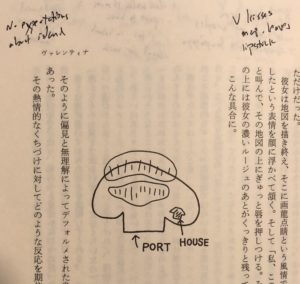
For Book 3, I’m reading at a much more leisurely pace. I’m only on page 348 but have been reading for nearly three weeks, which comes to 16 pages a day. One reason I’ve been reading more slowly is that I’ve been writing more notes. Take a look:

I’m using a technique a graduate student recommended to me when I was writing my senior thesis. At the time I was complaining that it felt like Japanese was going in through my eyes and straight out the back of my head – I didn’t feel like I was retaining anything. He suggested writing little notes above paragraphs to summarize the content. They don’t have to be extensive or detailed, but even a little summary of what is happening can help you 1) make sure you are paying attention while you read, 2) make sure you are understanding what you read and 3) find passages later when you are flipping back through.

If you find an important passage or important line, you can write something more detailed. Fortunately I did that for Book 1 and 2, so I had some things to talk about in my review. For Book 3, I’ve been notating it far more extensively, so it should be much easier for me to remember later and write about.

Posted in literature, Murakami, reading, theory | 4 Comments »

Ret’s Rink – 1Q84, Beer vs. Mutant Beer, Shibuya Station Pub Crawl, Facebook Page

Friday, April 23rd, 2010

Well, for various reasons I canceled my Europe trip. I’m bummed out about it, but it might be for the best – I’m moving back to the U.S. at the end of May to go to graduate school, and the extra time in Japan will enable me to say my goodbyes properly and to round up five years’ worth of belongings. I’m confident that I’ll get to Europe soon, maybe as soon as June or July.

How to Japonese will continue now and post-repatriation, but posting will be light until the beginning of June. Hopefully once a week. Today I’m just passing on some links with a bit of additional information.

“The knock-on effect of Murakami’s “1Q84” series”

This is my post on Japan Pulse about 1Q84 Book 3. I went to lunch in Yokohama Thursday and stopped in a bookstore after eating. The book hadn’t been released yet, but the displays were already stocked with 1Q84-related material. His complete 文庫本 back catalog, his translations, books mentioned in 1Q84. Pretty impressive. Murakami has made it easy with his prolific name-dropping. I’m about 120 pages in, and so far not much has happened, but the names keep coming. Since I wrote the article, he has started quoting extensive passages from Isak Deneson’s Out of Africa.

“Major beer companies diet excessively while craft brewers beef up”

I also wrote about the beer scene after being inspired by the Yokohama Spring Beer Party. It was on Sunday, April 11, as was the Japan Craft Beer Selection 2010 hosted by Popeye at the Bunkyo Kumin Center. The two events couldn’t be more different. I attended the Beer Selection last year, and the goal of the six and half hour event was to carefully judge all Japanese craft beers. Or at least all the beers entered in the competition. It starts with a lecture on how to judge beer, then continues to a practice tasting, after which the 100 or so participants undertake blind taste tests by style and fill out cards rating each beer’s bitterness, maltiness, aroma, mouthfeel and more. Last year they announced the winners on the spot, but this year beers that are selected continue on to the final round, which will be held on May 16th at Popeye.

The Yokohama Spring Beer Party, on the other hand, was a relaxed, picnic atmosphere. There were over two dozen beers, and it was all-you-can-drink for 2000 yen – quite a deal. Later in the afternoon there was even an impromptu 記念写真 with nearly all 500 participants along the Yokohama harbor. Several brewers were there, as were the staff from many of the Kanto-area bars. The contrast of the events, to me, showed that good beer is starting to go mainstream as well as otaku (it’s probably been otaku for a while now, actually). Very cool to see the frequency and variety of different beer events available in Japan.

Now if only we can get the tax laws changed. Seriously, someone should do something about this.

“The great Shibuya Station beer-lover’s pub crawl”

I also have a pub crawl review on CNNGo Tokyo. Five great beers from five great bars in Shibuya. I made a video of the crawl, which you can see here:

Shibuya Station Circumnavigation Great Beer Pub Crawl from Daniel Morales on Vimeo.

And finally, I made a Facebook page for How to Japonese, so feel free to follow the feed over there.

Posted in beer, literature, Murakami | 3 Comments »

号外 – 1Q84 Vol. 3 Live Tweeting

Friday, April 16th, 2010

1Q84 Vol. 3 is out! I have my copy reserved at a bookstore in Oimachi that opens at 10am, so I’ll pick it up there and then head straight to Café du Monde in Ito Yokado, which has wireless. I won’t be live blogging (already thing of the past), but I will try to tweet when my fingers aren’t covered with powdered sugar. Follow me @howtojapanese.

Posted in food, literature, Murakami | 3 Comments »

  • Follow @howtojapanese How to Japonese

    Promote Your Page Too
  • You are currently browsing the archives for the literature category.

  • Pages

    • About
    • Contact
    • Portfolio
  • Archives

    • February 2012
    • January 2012
    • December 2011
    • November 2011
    • October 2011
    • September 2011
    • August 2011
    • July 2011
    • June 2011
    • May 2011
    • April 2011
    • March 2011
    • February 2011
    • January 2011
    • November 2010
    • October 2010
    • September 2010
    • August 2010
    • July 2010
    • June 2010
    • May 2010
    • April 2010
    • March 2010
    • February 2010
    • January 2010
    • December 2009
    • November 2009
    • October 2009
    • September 2009
    • August 2009
    • July 2009
    • June 2009
    • May 2009
    • April 2009
    • March 2009
    • February 2009
    • January 2009
    • December 2008
    • November 2008
    • October 2008
    • September 2008
    • August 2008
    • July 2008
    • June 2008
    • May 2008
    • April 2008
    • March 2008
    • February 2008
  • Categories

    • airbag expressions (5)
    • appear (2)
    • beer (28)
    • body parts (7)
    • casual (31)
    • causality (3)
    • causative (10)
    • class notes (3)
    • comedy (26)
    • conjunctions (2)
    • custom (2)
    • dictionaries (5)
    • food (53)
    • gerund-related (6)
    • get used to it! (66)
    • giving (3)
    • kanji (88)
    • literature (45)
    • Murakami (56)
    • onomatopoeia (4)
    • particles (2)
    • passive (11)
    • phone (1)
    • podcast (1)
    • polite (27)
    • politics (3)
    • probability / possibility (3)
    • project management (5)
    • puzzle (38)
    • random (95)
    • reading (15)
    • receiving (3)
    • refusal (10)
    • reporting (1)
    • requesting (6)
    • research (2)
    • Resources (16)
    • theory (8)
    • travel (14)
    • TV (17)
    • Uncategorized (8)
    • underrated japan (5)
    • video (39)
    • video games (19)
    • vocab (110)
    • wordplay (31)
    • 変換 (2)

How to Japanese powered by WordPress | minimalism by www.genaehr.com
Entries (RSS) and Comments (RSS).